AI-Native CRM vs Traditional CRM: Why the Gap Is Widening
Traditional CRM platforms were built for a world where software had to be manually configured. AI-native CRM was built for now — where your system adapts to your business, not the other way around.
The Old Way
A traditional CRM implementation follows a familiar pattern:
- Hire a consultant
- Spend weeks on requirements gathering
- Configure fields, workflows, and roles manually
- Train your team
- Realise three months later that the system doesn't match how your business actually works
- Pay for more consulting to fix it
The mCoreBrain Way
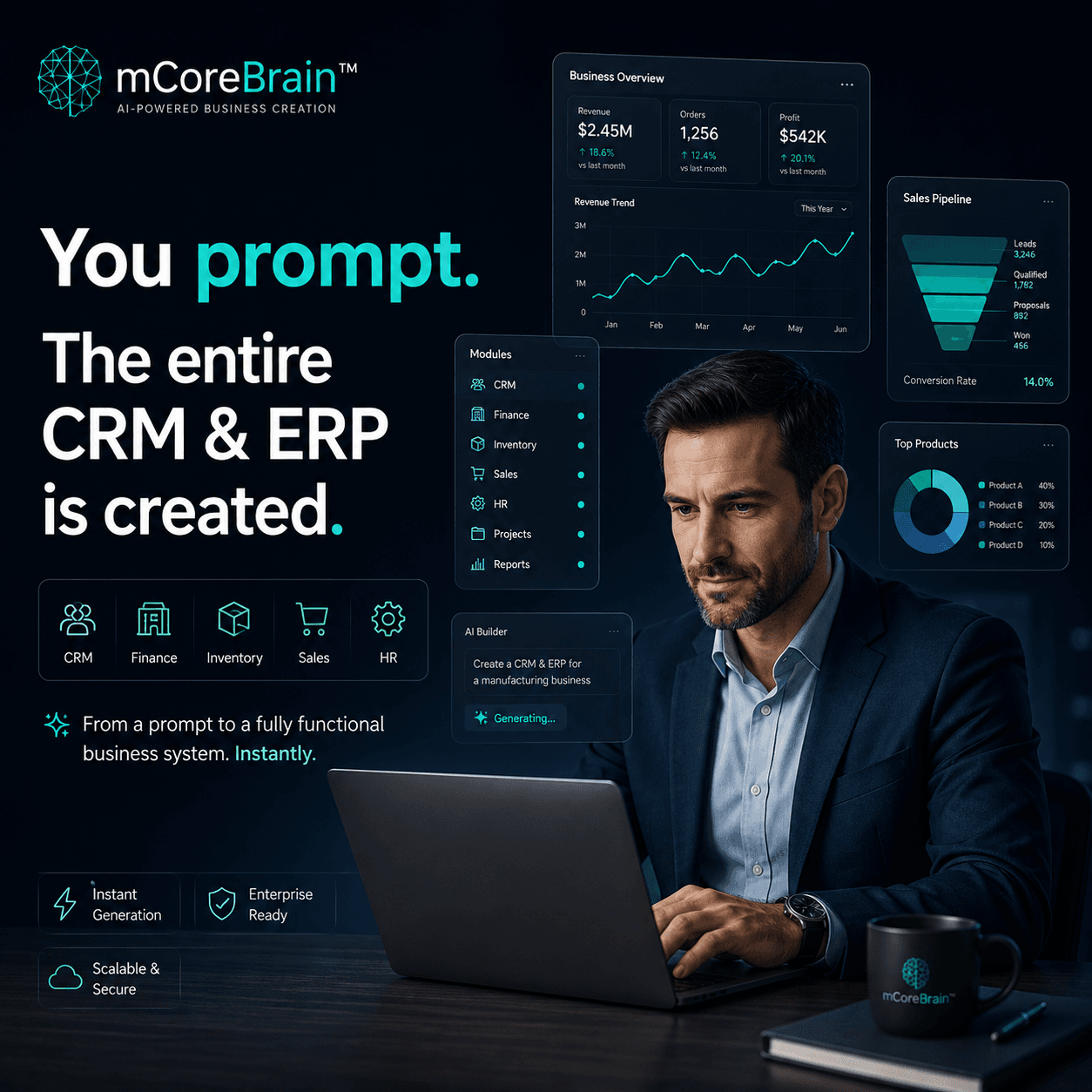
With mCoreBrain, you describe your business once. The AI generates the full architecture — modules, fields, relationships, workflows, pipelines, and role-based access — instantly.
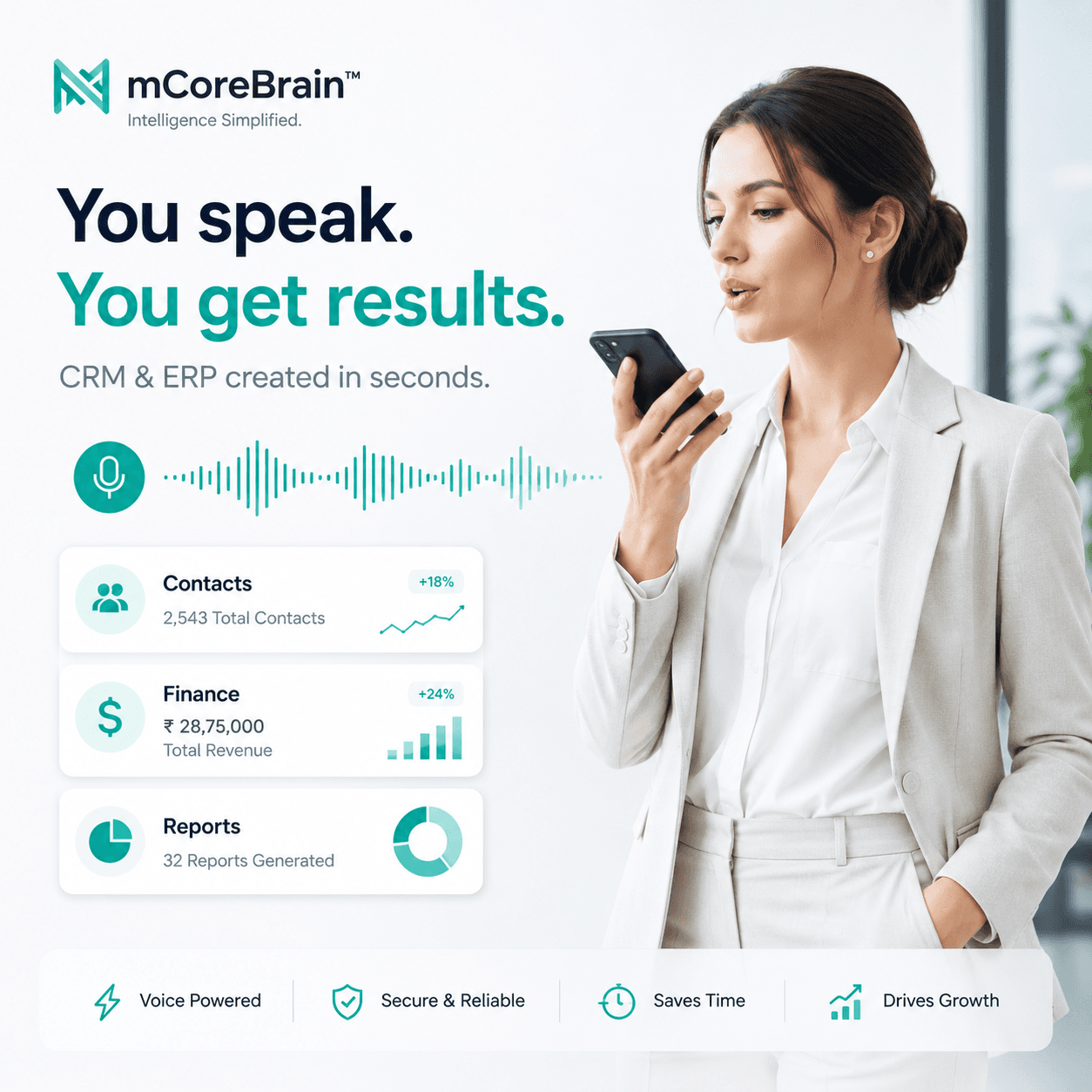
Want to change something? Just ask. The AI understands your context and adjusts.
The Core Difference
| Traditional CRM | mCoreBrain |
|---|---|
| Months to implement | Minutes to generate |
| Requires specialists | Requires only plain language |
| Fixed templates | Custom architecture for every business |
| AI added as an afterthought | AI-native from the ground up |
| Expensive reconfiguration | Prompt-based adjustments |
Why This Matters
The businesses winning today are the ones that can move fast. A CRM that takes six months to implement is a competitive disadvantage. A CRM that generates itself in minutes — and evolves with your business through conversation — is a competitive advantage.
mCoreBrain is that CRM.