How Event Management Firms Coordinate Venues, Vendors & Clients Without Platform Chaos
Event planners juggle dozens of moving parts across email, spreadsheets, and disconnected tools. mCoreBrain lets you build a unified platform in minutes—no coding required.
The Event Management Coordination Crisis
Event management firms live in perpetual chaos. You're coordinating venues, vendors, timelines, client requirements, budgets, and team workflows—often across multiple simultaneous events at different stages.
Most event planners rely on a fragmented tech stack: email threads for vendor communication, spreadsheets for timelines, a separate CRM for client contact, project management software for tasks, and accounting software for invoicing. Information lives everywhere and nowhere. A client calls with a question, and you're digging through three different systems to answer it. A vendor changes terms, and you manually update five spreadsheets. A team member leaves, and their institutional knowledge walks out the door.
Traditional CRM platforms like Salesforce or HubSpot are built for sales pipelines, not event coordination. They don't understand the relationships between venues, vendors, timelines, deliverables, and budgets. You end up forcing the software into shapes it wasn't designed for, paying for modules you don't use, and hiring consultants to configure workflows that should take days, not months.
What Event Planners Actually Need
Your system should reflect how you actually work:
- Multi-event dashboards showing all active events, their status, critical dates, and at-a-glance vendor and budget health
- Vendor management with contracts, payment terms, service agreements, and historical performance tracked in one place
- Unified client communication history—every email, call, request, and change order tied to the event, not scattered across inboxes
- Timeline and deliverable tracking with dependencies, reminders, and automatic escalations when dates slip
- Budget tracking that ties costs to vendors, events, and line items, with real-time variance reporting
- Team collaboration with role-based access so planners see their events, finance sees budgets, vendors see their scope, and clients see their deliverables
- Proposal and contract generation that pulls data from your system (not manual Word documents)
- Post-event reporting and profitability analysis by event, client, and venue type
How mCoreBrain Solves This in Hours, Not Months
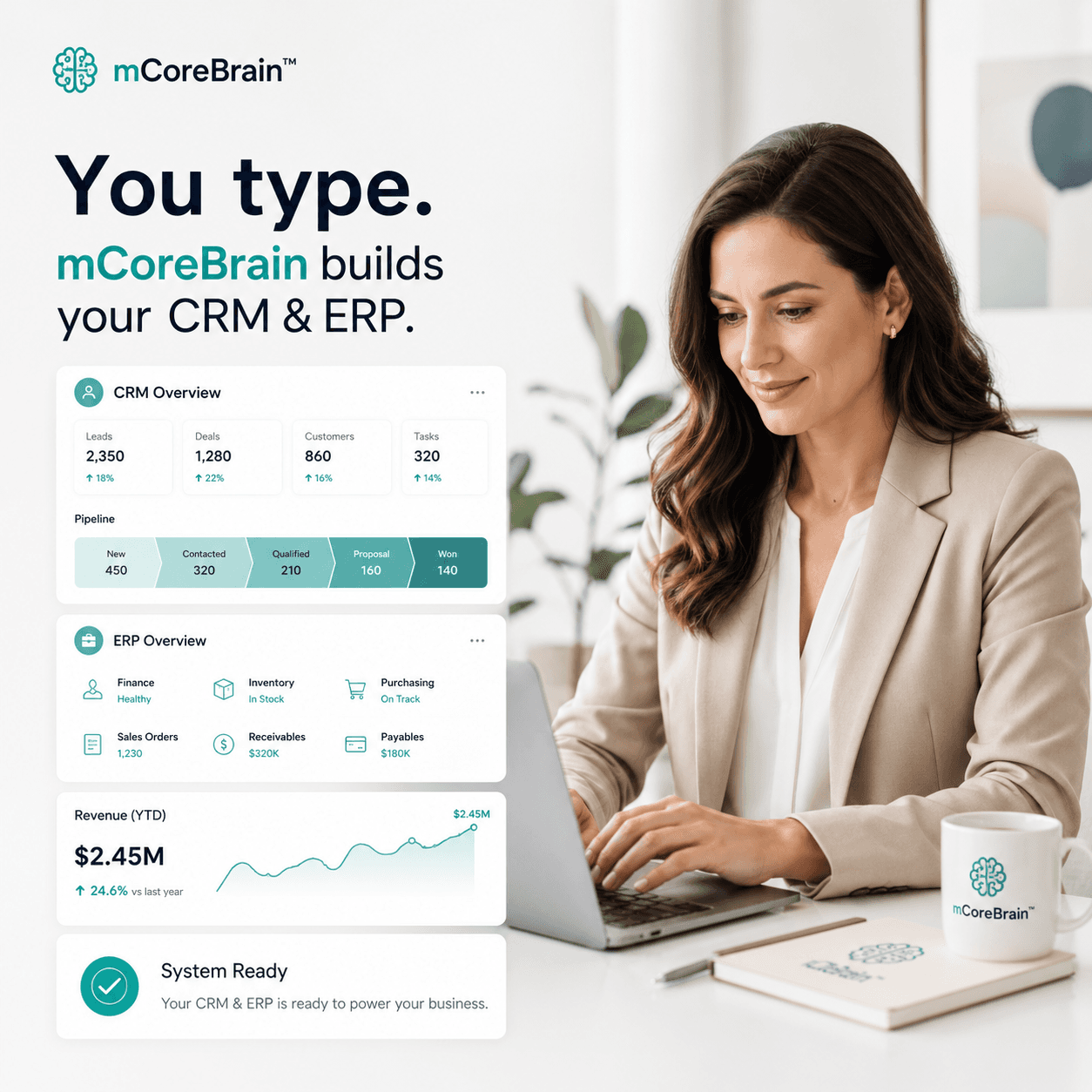
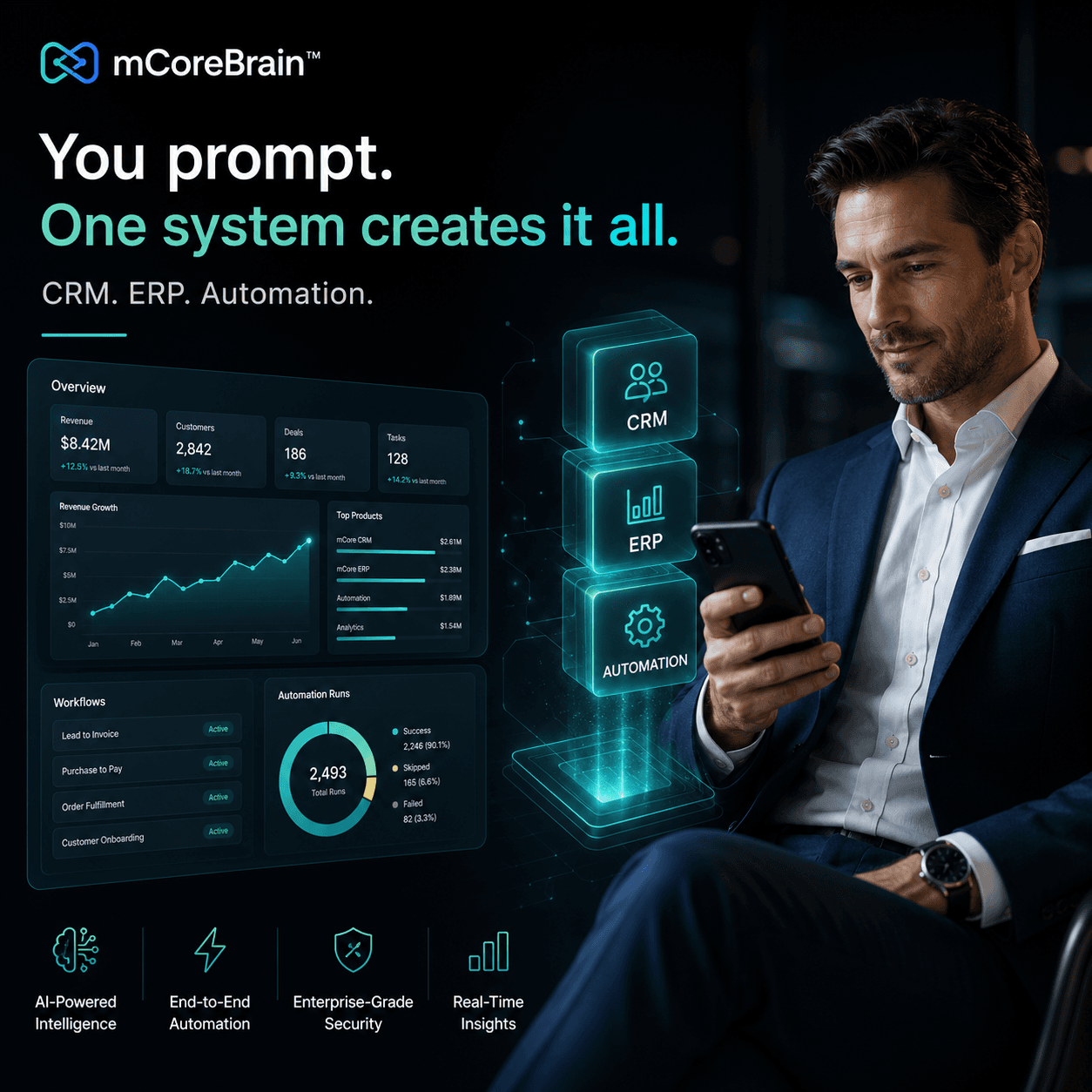
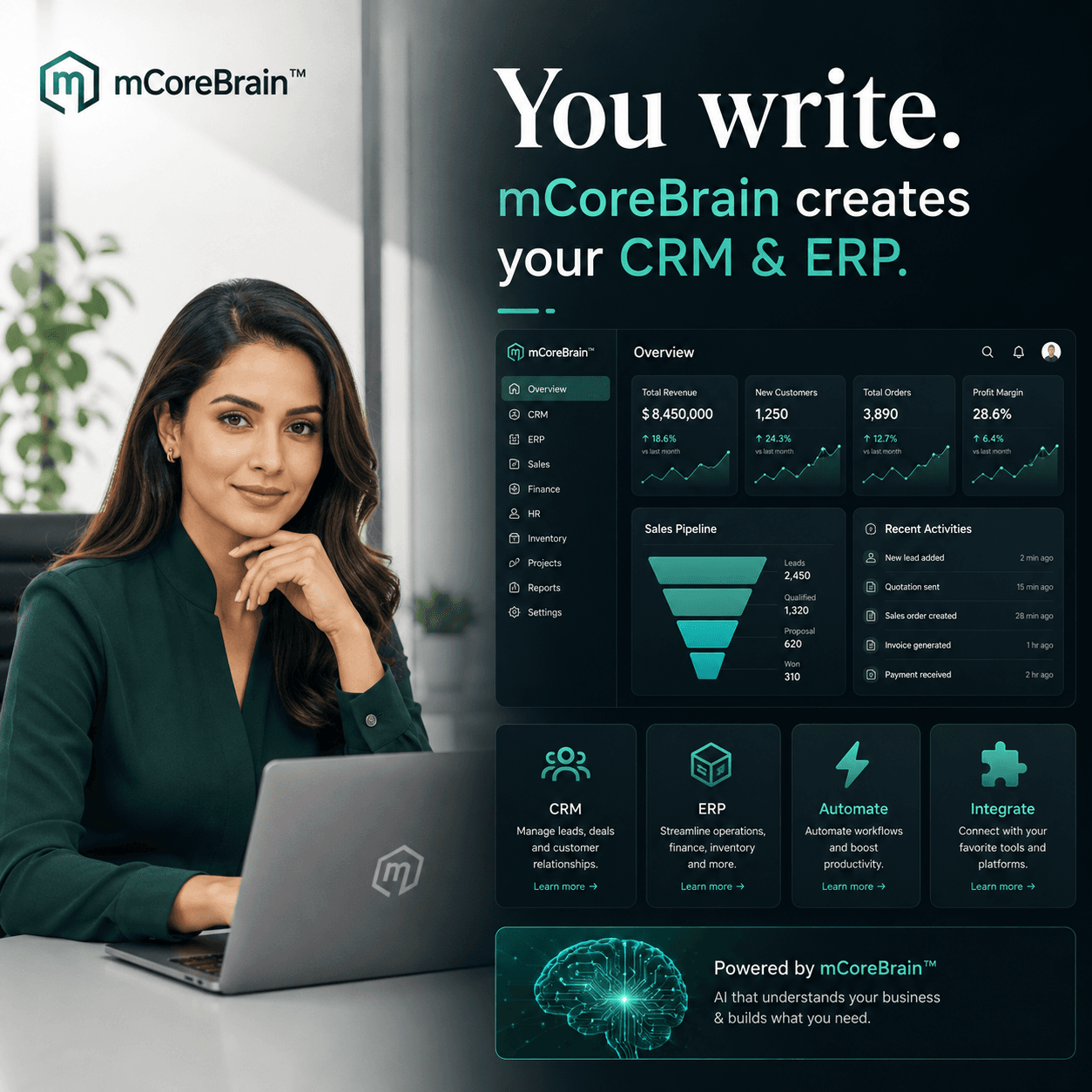
mCoreBrain is prompt-native CRM/ERP. You describe how you manage events—your stages, the data you track, who needs access to what, how approvals flow—and the AI generates the entire system. No code. No consultants. No months of configuration.
Here's what this looks like in practice:
Describe your workflow: "We manage events from inquiry to invoice. Each event has a status (proposal, confirmed, planning, execution, invoiced). We track the client, venue, event date, budget, and all vendors involved. Vendors have contracts and payment terms. Planners can only see their assigned events. Finance sees all events and budgets. Clients see a portal with their event details and deliverables."
The system generates itself: Fields, modules, workflows, roles, dashboards, and approval chains—all created in real time based on your description.
Deploy to production: One click, and your team is live. No pilot. No parallel testing. No legacy system migration nightmare.
Adapt on the fly: A new vendor type emerges? A client requests a custom approval workflow? You update your prompt, and the system evolves. No developer ticket queue. No weeks of waiting.
Governance for Regulated Coordination
Event management involves contracts, client data, and financial commitments. mCoreBrain's two-layer architecture enforces governance:
- Admin/Config layer — only authorized finance and ops leaders can change the system structure, create user roles, and set approval authorities
- Business user layer — planners, vendors, and clients interact with the system without breaking it, following the rules you've defined
The Real Benefit: Focus on Events, Not Software
Traditional CRM and ERP systems are built to serve the software company, not the event planner. They ship with bloated feature sets, lengthy setup processes, and vendor lock-in. mCoreBrain is built to serve you.
When you describe your event management process and the system generates itself, something shifts. The software finally maps to your business, not the other way around. Your team adopts it faster because it works the way they already think. You're not paying for features you'll never use. You're not waiting months to add a new event type.
Instead, you're spending your energy on what matters: delivering exceptional events, managing client relationships, and scaling your firm.
Next Steps
If your event management firm is still coordinating across email, spreadsheets, and disconnected tools, it's time to consolidate. Visit mcorebrain.org to see how prompt-native CRM/ERP can build your unified event management platform in hours. Describe your workflow, deploy to production, and start closing more deals with less friction.