How Insurance Adjusters Process Claims 3x Faster
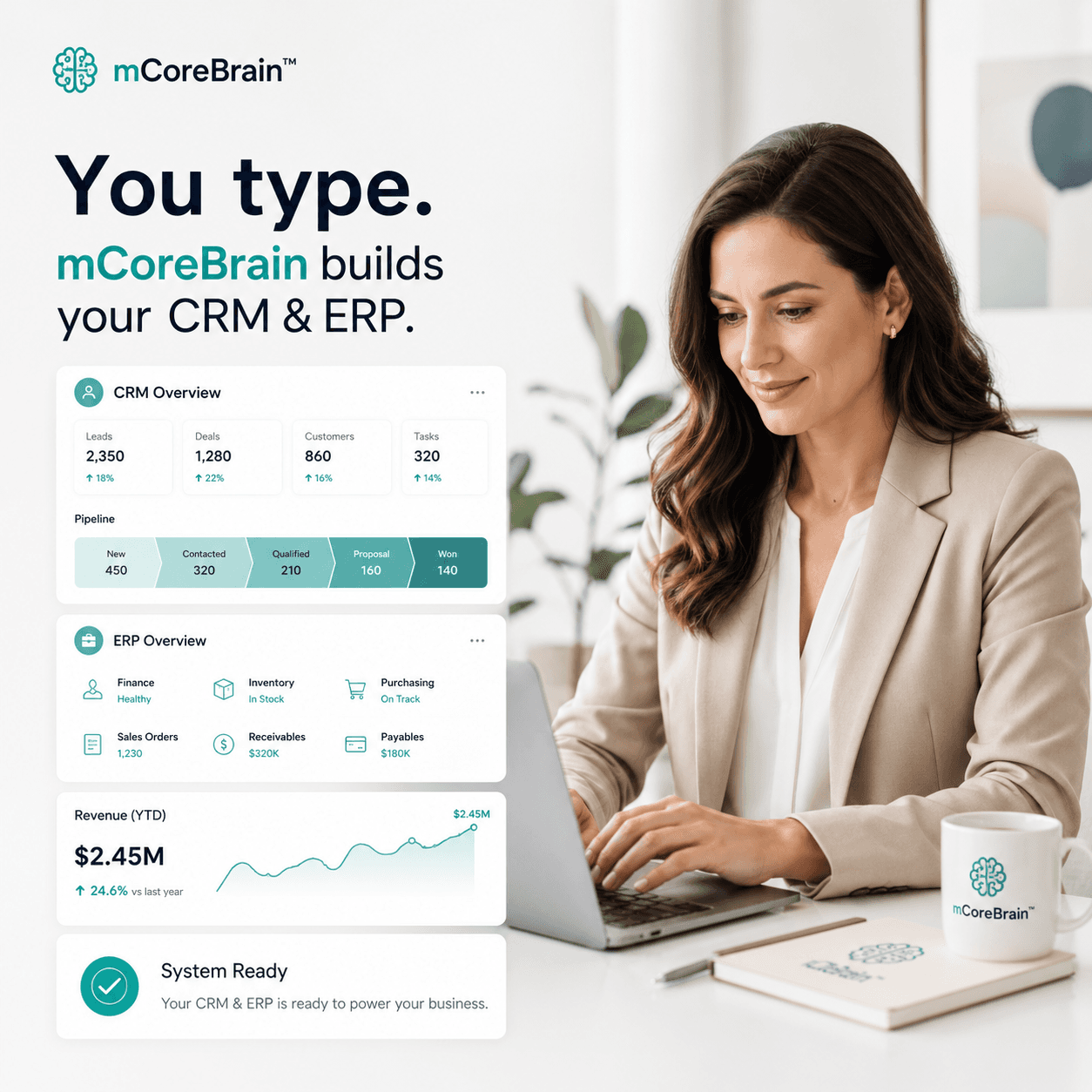
Insurance claim processing is drowning in spreadsheets and manual handoffs. mCoreBrain lets adjusters build a custom claims workflow in minutes—no IT, no waiting.

The Insurance Adjuster's Nightmare
Insurance claim processing hasn't fundamentally changed in decades. A claim comes in. An adjuster manually enters it into one system. Documents go into another. Status updates live in email threads. A supervisor monitors progress in yet another tool. By the time a claimant gets an answer, weeks have passed—and the adjuster has spent more time data-entry than actual investigation.
Large insurers throw money at custom builds. Mid-sized firms jury-rig Salesforce or spreadsheets. Small adjusters juggle everything manually.
The result? Claim cycles that stretch 30–60 days. Angry customers. Staff burnout. And adjusters doing work a system should handle.
Why Traditional Software Fails Adjusters
Generic CRM platforms like Salesforce weren't built for claims work. They don't understand the claim lifecycle: intake → assignment → investigation → assessment → approval → payout. You end up either cramming claims into a sales pipeline (confusing and wrong) or paying six figures for custom development that takes six months and breaks the first time your process changes.
ERP systems are even worse—designed for manufacturing, not knowledge work. Legacy insurance software is so locked down that changing a field requires a vendor call and a 12-week release cycle.
Meanwhile, your adjusters—your core asset—spend 40% of their time wrestling with systems instead of solving claims.
How mCoreBrain Changes the Game
mCoreBrain is built for exactly this problem. Instead of forcing claims into a pre-made shape, you describe your claims process in plain language:
"We intake a claim with claimant details, damage description, and photos. We assign it to an adjuster. They schedule an inspection, review police reports, request repair estimates, and make an assessment. A manager approves or denies. If approved, we route to payout."
That's it. No technical language. No design documents. No waiting.
mCoreBrain's AI instantly generates:
- Claim intake forms capturing claimant, policy, and incident details
- Assignment workflow routing claims to the right adjuster based on specialty and capacity
- Document management (photos, reports, estimates) attached and searchable
- Inspection scheduling with date/time coordination
- Assessment templates that guide adjusters through fair evaluation
- Approval pipeline with manager review and sign-off
- Status tracking visible to claimants and internal teams
- Reporting dashboards showing claim volume, cycle time, approval rates, pending work
- Role-based access so claimants see only their claim, adjusters see their queue, managers see all
Real Impact for Adjusters
Faster investigation. No more digging through emails for documents or previous notes. Everything—photos, inspection dates, repair quotes—lives in one claim record. An adjuster can review a file in 5 minutes instead of 30.
Parallel workflows. While one adjuster schedules an inspection, another reviews medical records, another requests estimates. Work moves concurrently, not in lockstep.
Intelligent assignment. New claims automatically route to the adjuster with the lightest load and right expertise (auto damage, property, liability). No manual queue management.
Claimant self-service. Claimants can upload photos, check status, and reschedule appointments without calling. Fewer support tickets. Better experience.
Audit trail by design. Every change, comment, and decision is timestamped and logged. When a claim is disputed months later, you have proof.
Mobile-ready. Adjusters in the field can access claim files, take photos, add notes, and schedule inspections from their phone—all synced instantly.
The Governance Layer Matters
mCoreBrain's two-layer architecture is critical for insurance. Admins (compliance, IT) govern the system: define required fields, set approval workflows, enforce audit rules. Business users (adjusters, managers) use the system without touching technical bits.
This means:
- Compliance built in. Workflows enforce state regulations and company policy by default.
- Security. Role-based access ensures claimants see only their claim, competitors can't peek at rates.
- Flexibility. When regulations change, admins update the process. No code required.
From Spreadsheets to System
One regional adjuster firm spent years managing 200 claims in Excel. Cycle time was 45 days. They described their process to mCoreBrain, deployed in a day, and dropped cycle time to 14 days. Adjusters spent time actually assessing claims instead of copy-pasting data. Claimants got answers faster.
That's what happens when software matches the work instead of forcing work into software.
Ready to Transform Claims?
If your adjusters are still wrestling with spreadsheets, email threads, and manual handoffs, it's time to rethink. mCoreBrain lets you build a claims system that works the way adjusters actually think—no IT, no wait.
Visit mcorebrain.org to describe your claims process and see your system auto-generate in real time. Deploy to production when you're ready. Scale as you grow. Change it whenever you need to.