How Logistics Coordinators Manage Shipments Without System Sprawl
Logistics teams juggle carriers, rates, tracking, and compliance across five systems. mCoreBrain unifies it all in one AI-native platform—no custom code required.
The Logistics Coordination Problem
A typical logistics coordinator's day looks like this: check email for shipper requests, log them into a spreadsheet, cross-reference carrier rates in a separate portal, update tracking status in a custom database, flag compliance issues in another tool, and reconcile billing in yet another system. By end of day, they've touched six different platforms—none of which talk to each other.
Result? Missed shipments, duplicate data entry, rate errors, slow customer updates, and compliance blind spots.
The industry standard response has been to bolt together point solutions: TMS (transportation management system) + CRM + accounting software + a custom integration layer. Cost: $50K–$200K to set up. Timeline: 6–12 months. Maintenance: ongoing, fragile, and vendor-dependent.
There's a better way.
Why Traditional ERP Fails Logistics Teams
SAP, Oracle, and Infor were built for manufacturing and enterprise operations. They require:
- Deep customization by certified consultants
- Inflexible data models that don't adapt when your carrier or shipper requirements change
- Months of implementation before seeing value
- High licensing costs that scale with users, making it hard to add coordinators or admins
- Opaque workflows buried in configuration tables, not discoverable by the people who actually do the work
You end up building custom automations, hiring developers, and maintaining another system.
How mCoreBrain Changes the Game
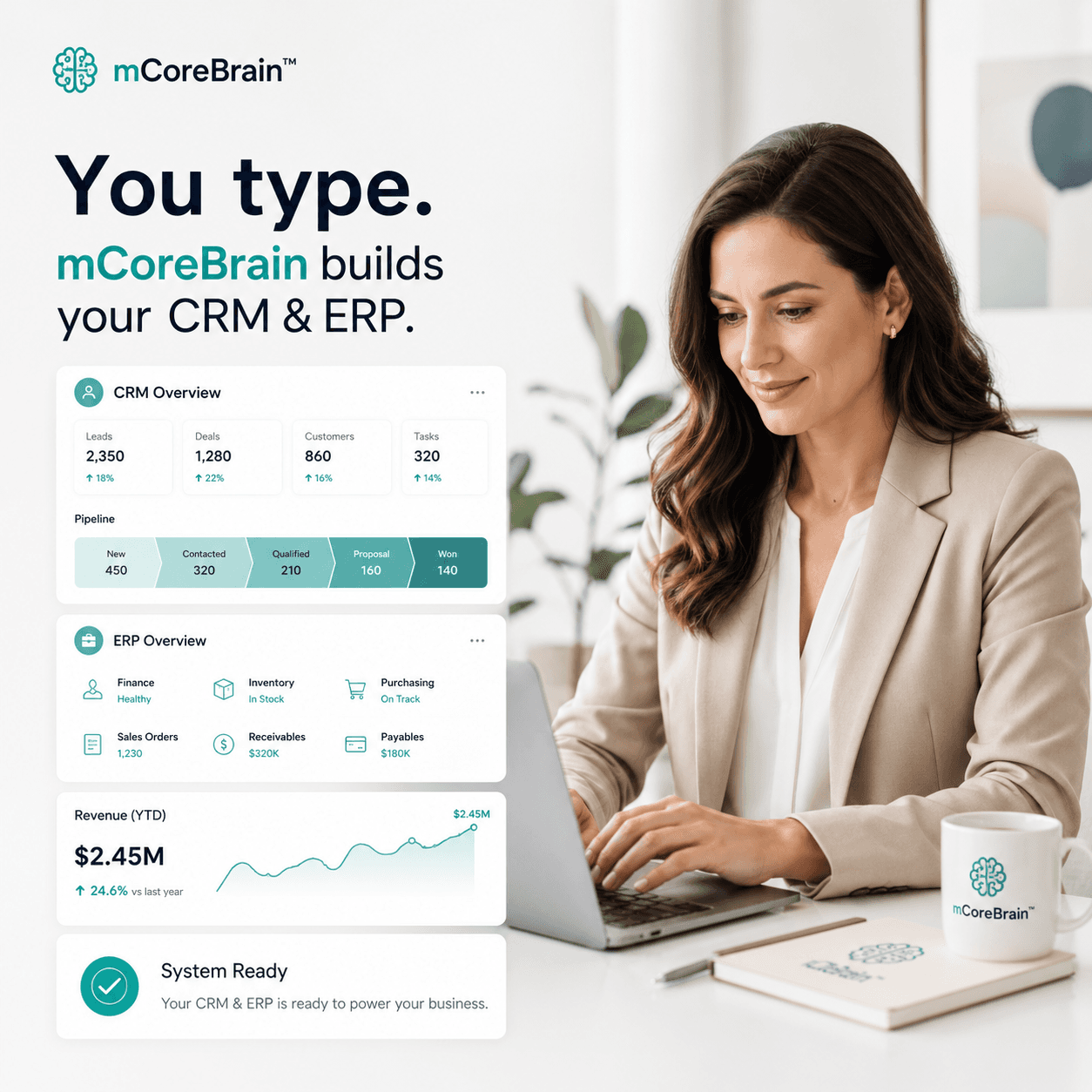
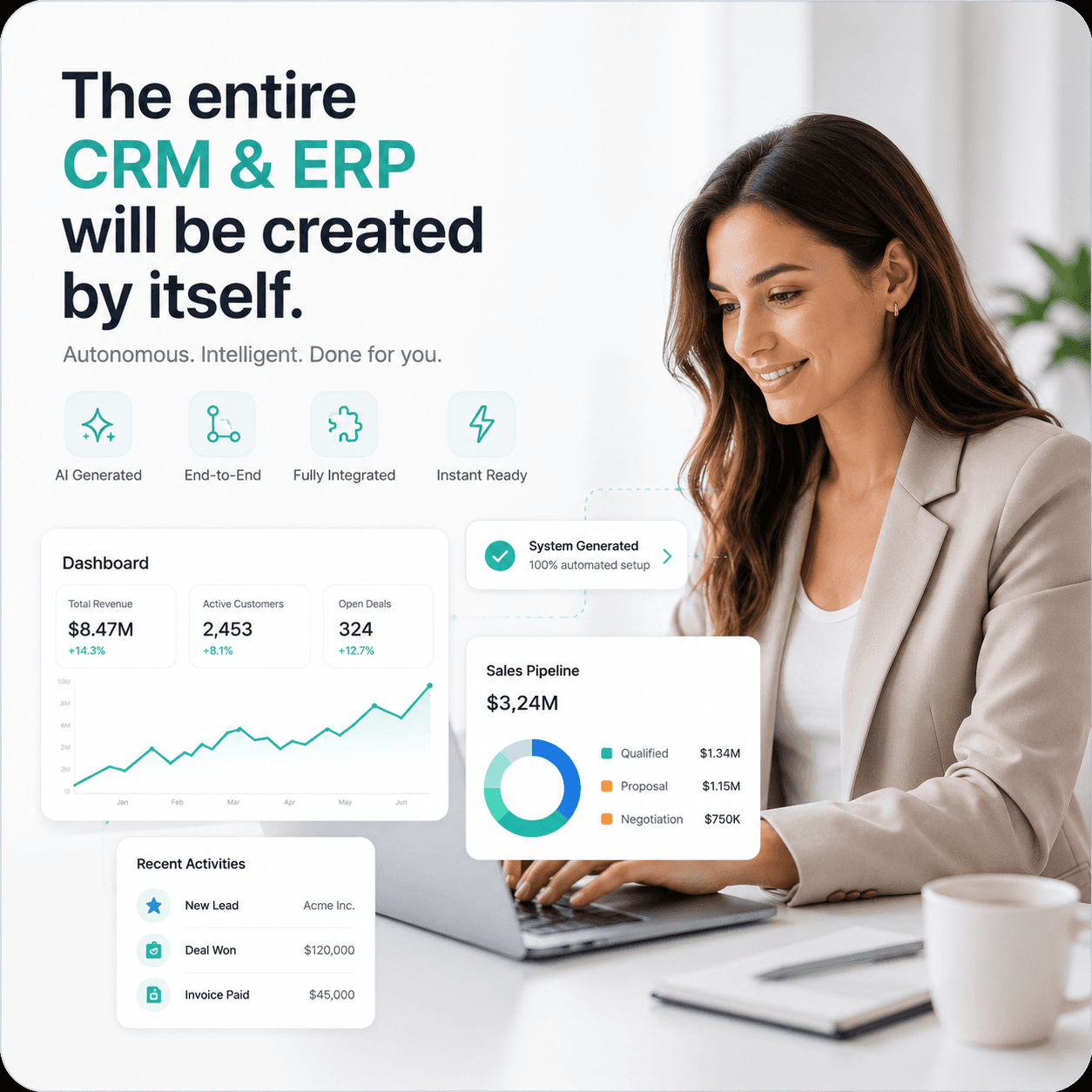
mCoreBrain is prompt-native: you describe your logistics operation in plain language, and the AI generates your entire CRM/ERP instantly. No consultants. No code. No six-month wait.
Here's what that looks like in practice:
Describe Your Operation
You tell mCoreBrain:
"We manage LTL and FTL shipments from multiple shippers to carriers. We track rates, pickups, in-transit status, and final delivery. We need to reconcile freight bills with shipper invoices, flag mismatches, and export compliance docs. Our team needs role-based access: coordinators can view shipments, admins can manage carrier rates and billing rules."
AI Generates Your System
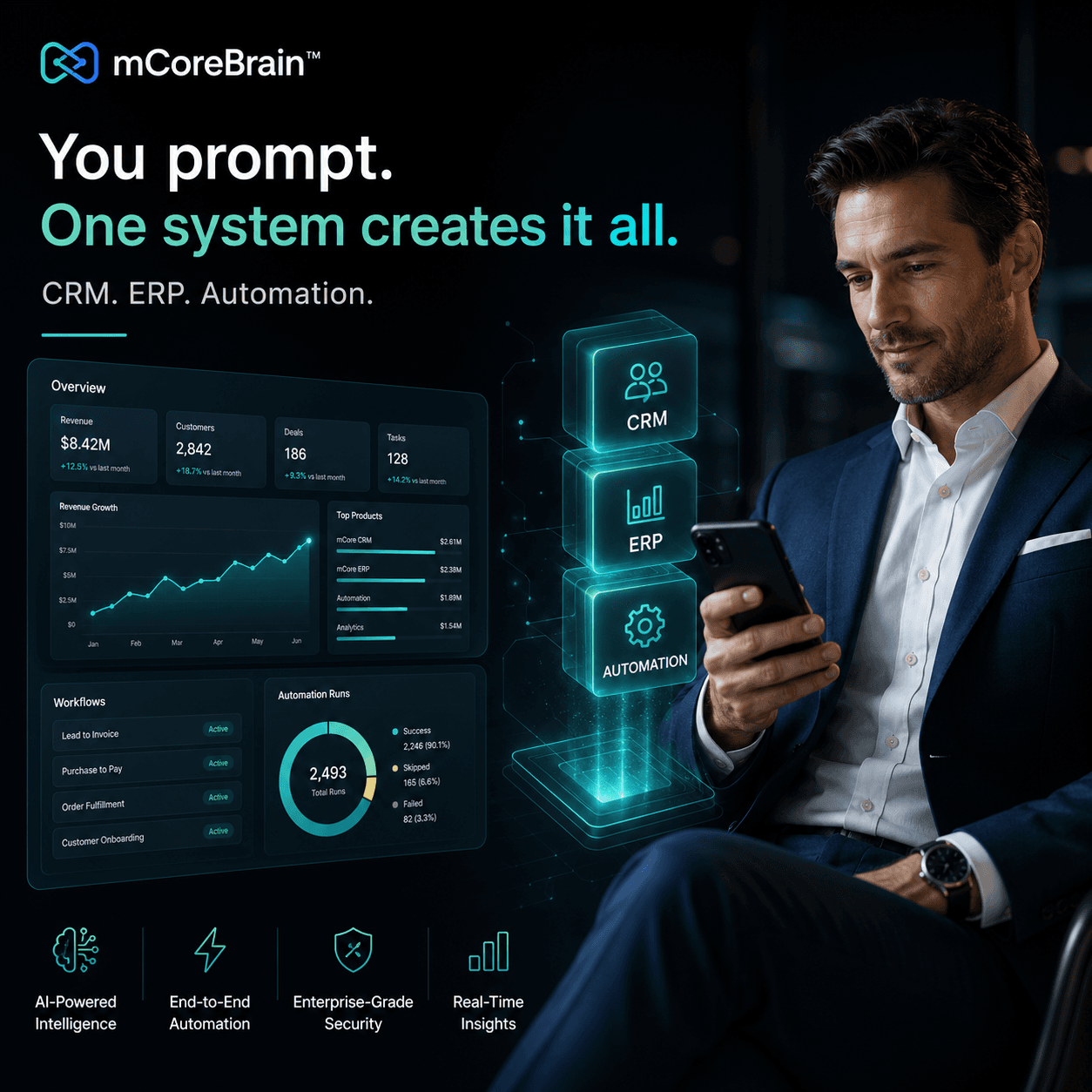
mCoreBrain instantly creates:
- Shipper module: Contact, service level, billing terms, preferred carriers
- Shipment module: Origin, destination, weight, rate, carrier assignment, tracking status, estimated delivery
- Carrier module: Rate cards, service levels, certifications, performance metrics
- Billing module: Freight bill matching, invoice reconciliation, variance reporting
- Compliance module: Required documentation, export/import rules, audit trails
- Workflows: Shipper request → rate quote → carrier assignment → pickup → tracking → delivery → reconciliation
- Dashboards: Shipments in transit, overdue deliveries, billing discrepancies, carrier KPIs
- Role-based access: Coordinator view vs. admin view vs. finance view
- Admin/config layer: Where you (or your implementation partner) refine data models, workflows, validation rules, and integrations
- Business user layer: Where coordinators, dispatchers, and finance teams work without touching configuration
Deploy in Hours, Not Months
Once generated, you:
- Review the system in a staging environment
- Connect to your carrier APIs and accounting software (via pre-built connectors or webhooks)
- Import historical shipment data
- Run a live pilot with your team
- Deploy to production with one click
Real-World Benefits
Reduced data entry errors: Carriers, rates, and billing rules are entered once, used everywhere.
Faster shipper response: Customers can see real-time tracking and estimated delivery without calling.
Billing accuracy: Automated freight bill reconciliation catches discrepancies before payment.
Compliance confidence: All required docs are generated, stored, and auditable in one place.
Team scaling: Add coordinators without expensive user licensing. Each user role has exactly the access they need.
Adaptability: When a new shipper requests a custom service level or a carrier changes rates, you update it in mCoreBrain without developer help—just describe the change in plain language, and the AI updates the system.
What's Different
Unlike traditional ERP (rigid, expensive, slow) and modern no-code tools (flexible, but you build everything yourself), mCoreBrain is intelligent: it understands logistics domain logic and generates a production-ready system that your team can operate and evolve immediately.
You're not buying a tool. You're describing your business, and the AI builds the system that matches how you actually work.
Next Steps
If your logistics team is still juggling spreadsheets, email, and five different platforms, it's time to consolidate. Visit mcorebrain.org to see mCoreBrain in action, request a demo for logistics teams, or start with a free trial. Describe your operation—let the AI build your system—and deploy within days.