How Logistics Firms Cut Admin by 60% with AI-Native Systems
Logistics companies are drowning in manual data entry across shipments, vendors, and compliance. mCoreBrain eliminates that friction by generating custom workflows in minutes, not months.
The Logistics Bottleneck Nobody Talks About
A mid-sized freight forwarding company processes 500+ shipments weekly. Each one touches five systems: booking, invoicing, compliance, customer communication, and supplier management. A customs delay, a miscoded shipment, a missed email—any of these cascades into cost overruns and reputation damage.
Most logistics firms patch this problem with Salesforce, Oracle, or custom spreadsheets. Integration is a nightmare. Training takes weeks. By the time you've configured role-based access and built your first report, you've already missed half your ROI window.
mCoreBrain changes this equation entirely.
What a Prompt-Native CRM Means for Logistics
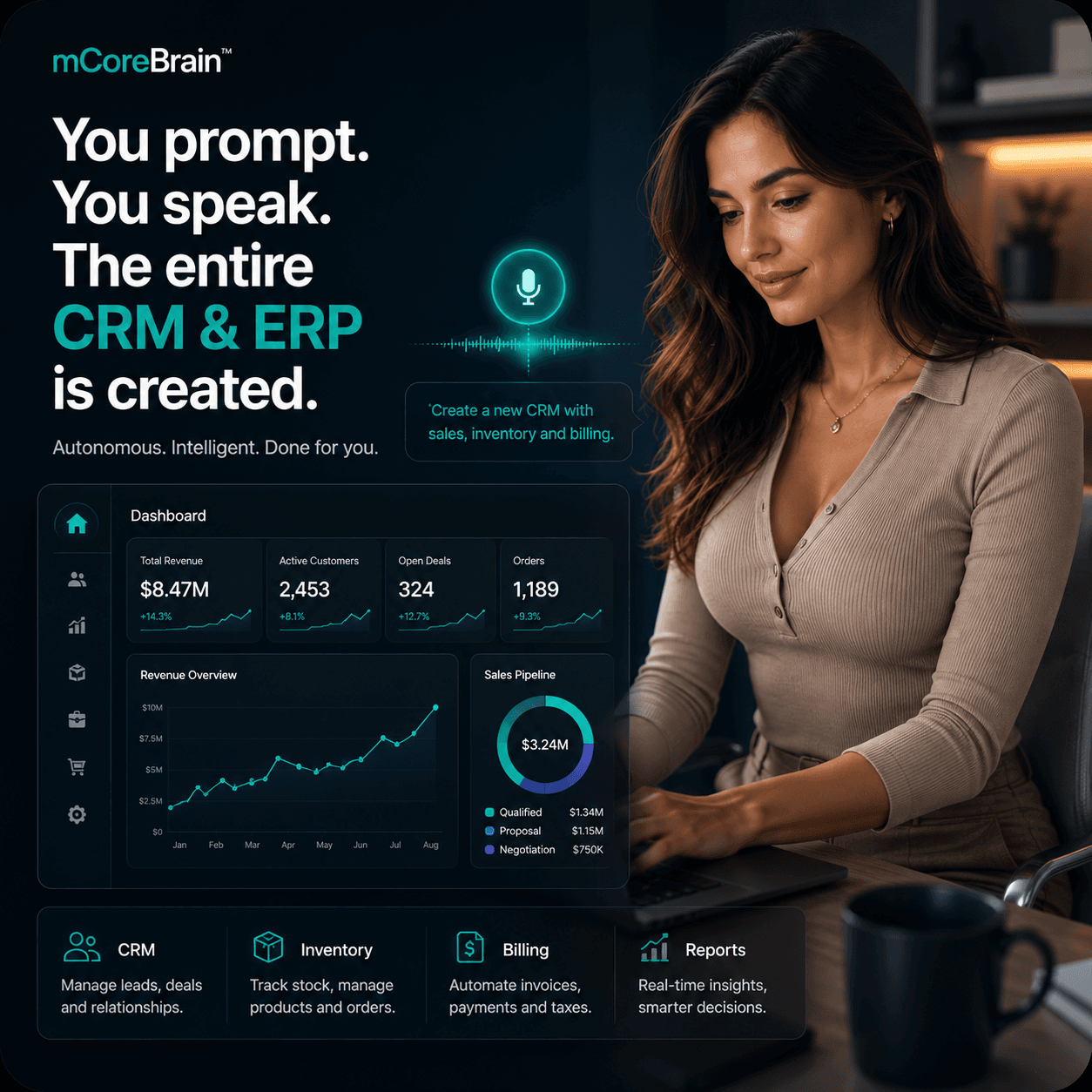
Instead of hiring consultants to map your business processes, you describe them to the AI. Your team tells mCoreBrain:
"We need to track active shipments by carrier, flag those delayed more than 12 hours, auto-notify customers, and log exceptions in our compliance module."
In seconds, mCoreBrain generates:
- Custom data model with shipment, carrier, customer, and exception records
- Workflow automation that monitors shipment status and triggers alerts
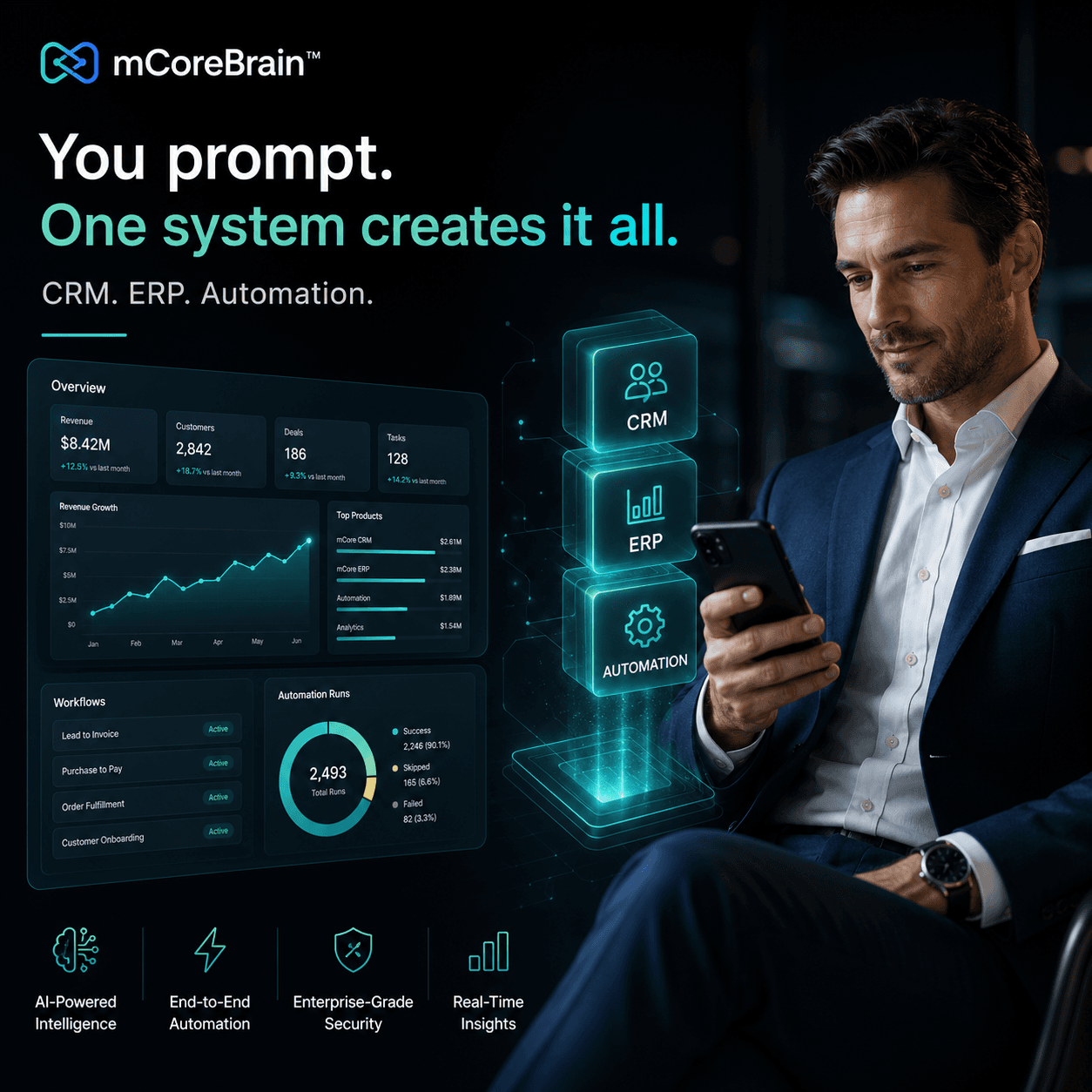
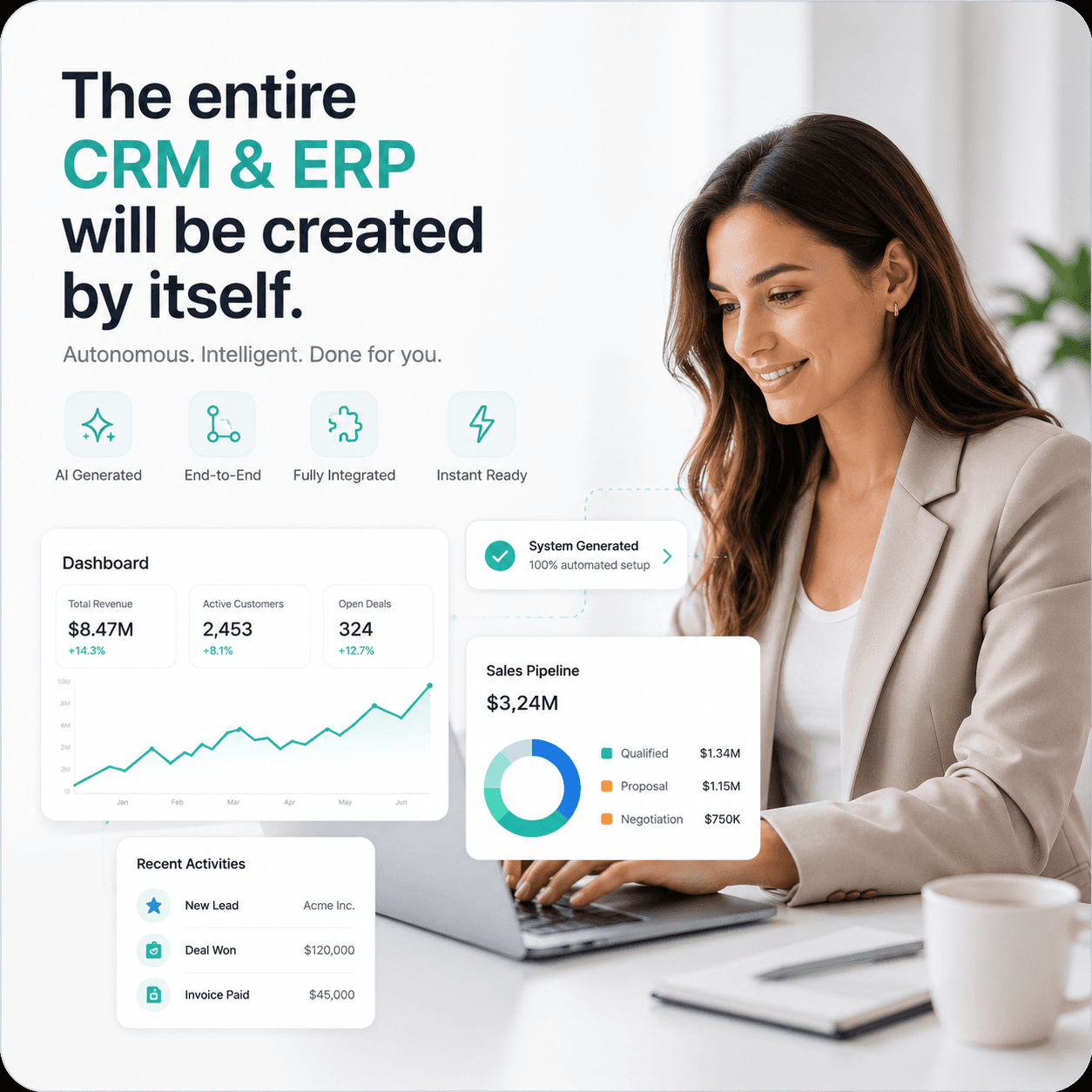
- Role-based dashboards for operations, customer service, and compliance teams
- API integrations ready to connect to your existing booking system
Real Problems, Solved Fast
1. Unified Shipment Visibility
Logistics teams juggle multiple carriers, each with its own tracking portal. mCoreBrain pulls all shipments into a single source of truth, filterable by status, customer, destination, and risk level. Dispatchers see delays in real time. Customer service reps answer "where is my shipment?" without leaving the CRM.2. Compliance Without the Headache
Customs, IMEX, hazmat, dangerous goods—each carries documentation requirements. Instead of maintaining separate compliance checklists, you describe your rules once to mCoreBrain. The system enforces them automatically: incomplete shipments are flagged, documents are archived, audit trails are generated.3. Vendor & Carrier Management
You need to track carrier performance (on-time delivery %, cost per lane, damage rates), manage negotiations, and route shipments to the best performer. mCoreBrain auto-calculates KPIs and surfaces underperforming carriers so you can renegotiate rates or diversify routes.4. Billing Accuracy
Freight bills are complex: weight-based, zone-based, fuel surcharges, customer discounts. One miscoded shipment spawns disputes. mCoreBrain's flexible field structure lets you define every billing rule and auto-apply them. Invoices are generated error-free, disputes drop, cash flow accelerates.5. Customer Portal Without Custom Code
Clients want real-time tracking, invoice history, and quote requests. Instead of building a portal, you expose mCoreBrain's business layer to customers. They see their shipments, download documents, and submit new jobs—all within a UI generated from your system schema.The Speed Advantage
Traditional CRM/ERP projects in logistics run 6–18 months. You define requirements, wait for build time, test in staging, debug in UAT. By launch, your team has already found workarounds. Adoption stalls.
mCoreBrain compresses this to weeks or days:
- Week 1: Describe your workflow to the AI. Review the generated system. Tweak it.
- Week 2: Load sample data. Train your teams. Run a pilot with one carrier.
- Week 3: Integrate with your booking system. Deploy to production. Go live.
Two-Layer Governance: Safety for Enterprise
Logistics companies need guardrails. Your compliance team shouldn't accidentally expose PII. Your operations team shouldn't create circular workflows.
mCoreBrain's admin/config layer separates system design (governed by experts) from business operations (used by non-technical staff). Admins define what data exists, who can see it, and what actions are allowed. Users work within those constraints without touching the schema.
This architecture scales from a 10-person freight broker to a 500-person 3PL with subsidiary networks.
The Real Win: Focus on Your Customers
When your team isn't fighting software, they drive customer outcomes. Faster shipment processing means happier clients. Fewer compliance errors mean lower risk and better carrier rates. Real-time visibility means you catch problems before customers do.
That's the promise of AI-native systems: technology should enable your business, not constrain it.
Ready to Modernize Your Logistics Stack?
If your team is tired of spreadsheets, slow integrations, and weeks-long implementations, it's time to explore how mCoreBrain can rebuild your operations in days. Visit mcorebrain.org to see how the world's first prompt-native CRM & ERP can work for your logistics business—no code, no lengthy contracts, no guessing.