How Logistics Operators Track Shipments & Profits Without ERP Sprawl
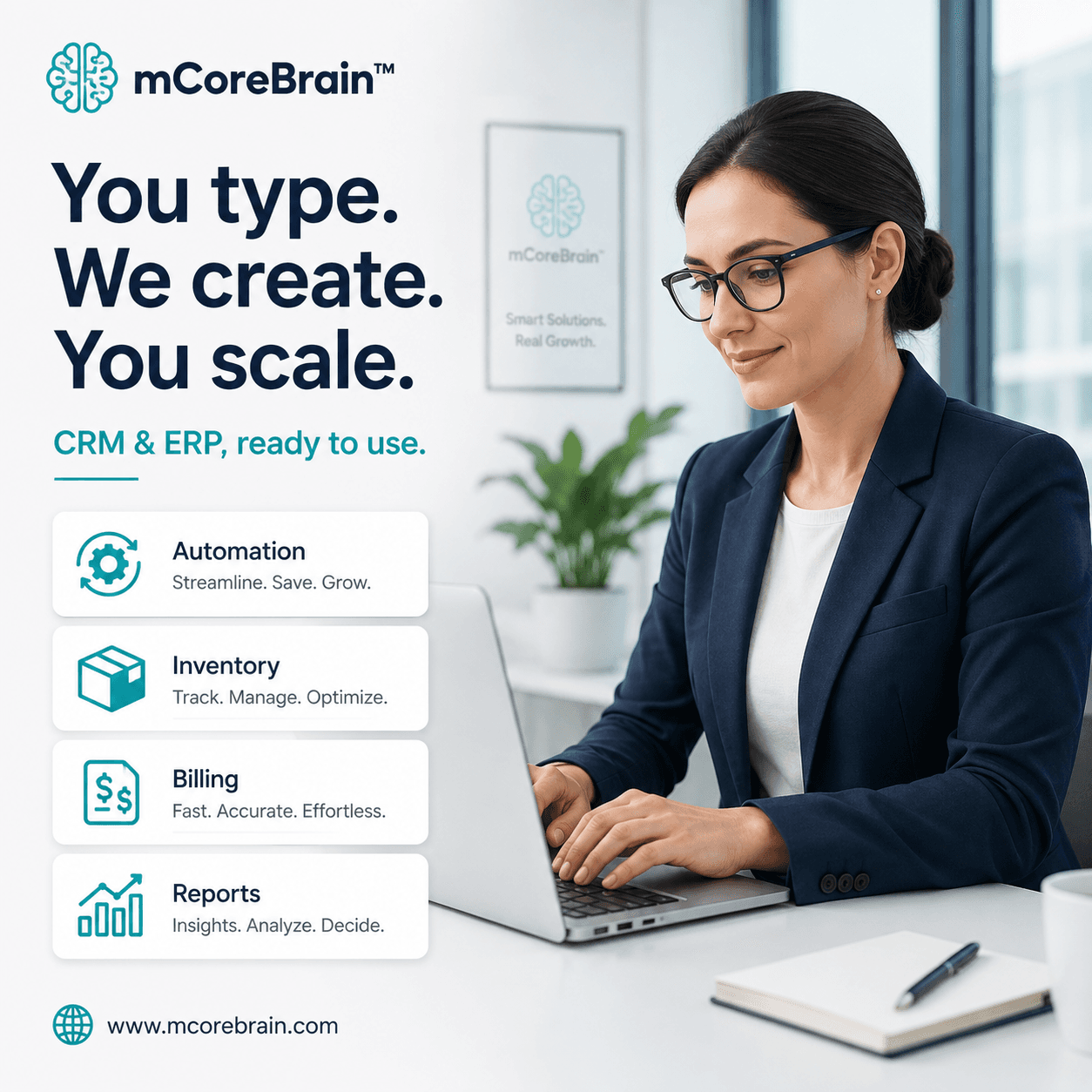
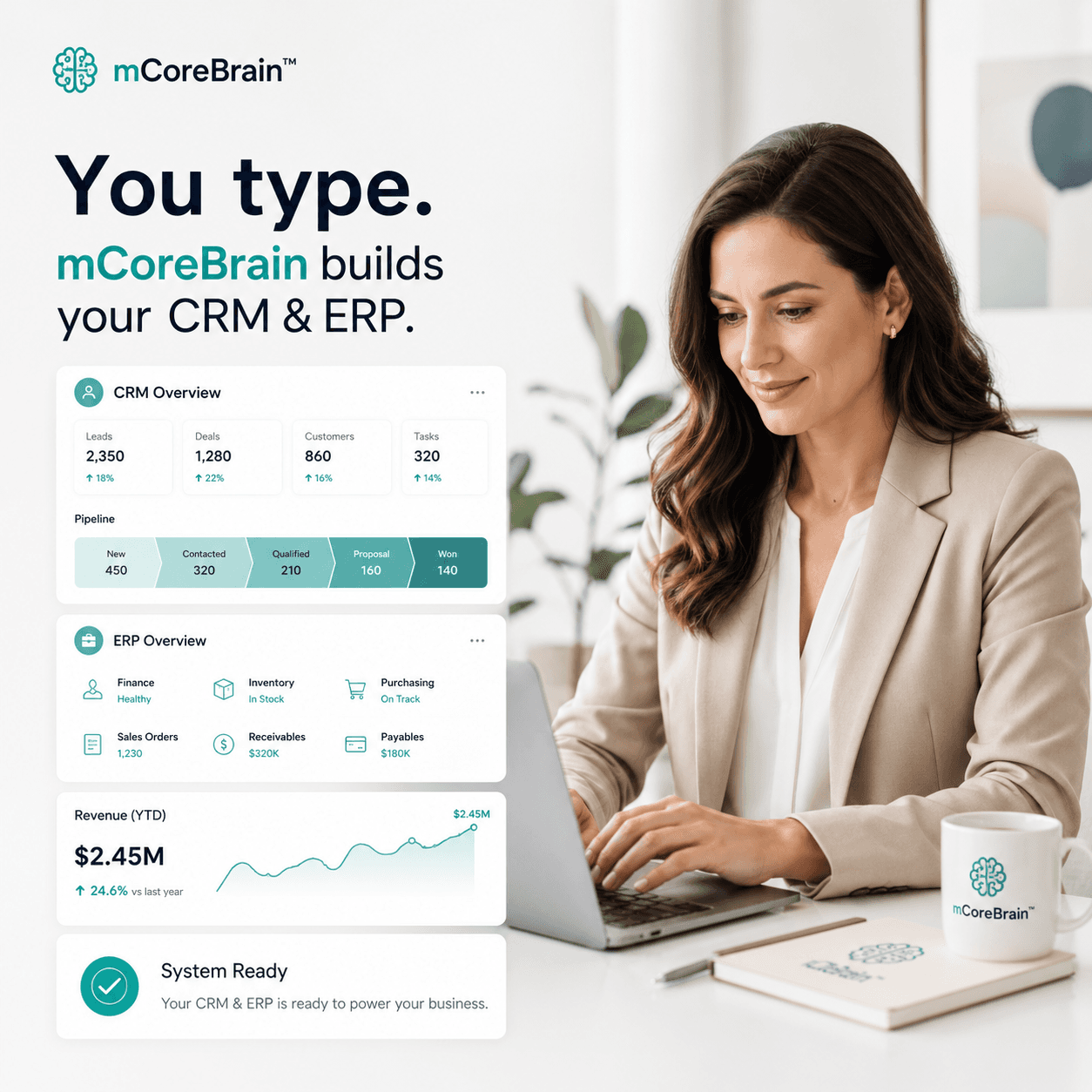
Logistics companies juggle shipments, drivers, costs, and compliance across fragmented systems. mCoreBrain eliminates the chaos with one AI-generated platform.
The Logistics Software Nightmare
Logistics operators face a brutal reality: every shipment touches five or six disconnected systems. Order management lives in one tool, fleet tracking in another, dispatch in a third, billing in a fourth. Driver data here, customer contracts there, compliance documentation somewhere else entirely.
The result? Shipments get lost in the handoff. A driver doesn't see the latest route update because dispatch can't sync with navigation software. Billing gets the shipment weight wrong because it didn't pull from the tracking system. Compliance checks fail because documentation lives in email and spreadsheets.
Traditional ERP systems promise to solve this—but they're dinosaurs. Implementation takes 6–18 months. You need a consultant army. Customization costs $50,000+. Training your team takes weeks. And by the time it's live, your business has changed and the system is already rigid.
What Logistics Operators Actually Need
Your business is simple in concept, complex in execution:
- Inbound orders: customer pick-ups, drop-offs, special handling requirements
- Fleet management: driver assignments, vehicle capacity, maintenance schedules, fuel costs
- Real-time tracking: GPS updates, proof of delivery, customer visibility
- Cost visibility: per-shipment profitability, fuel surcharges, driver wages, vehicle depreciation
- Compliance: hazmat documentation, hours-of-service rules, insurance certificates, customer certifications
- Billing: invoicing by shipment, weight, distance, or service tier; automatic reconciliation
- Reporting: on-time delivery rates, cost per mile, driver performance, customer profitability
How mCoreBrain Works for Logistics
You describe your business. The AI builds it.
Instead of buying modules and bolting them together, you tell mCoreBrain:
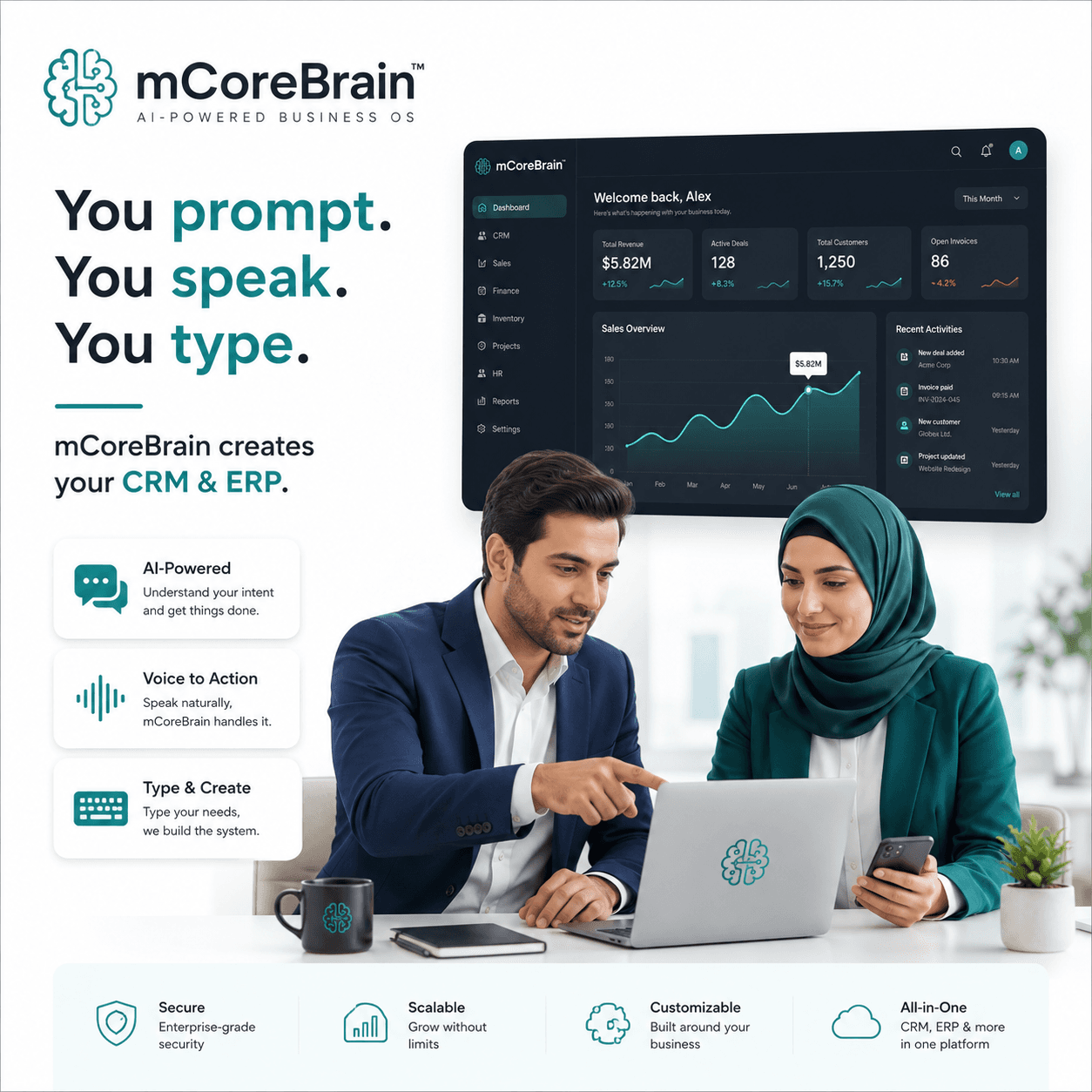
"We manage inbound shipments by customer, assign them to drivers and vehicles based on capacity and route, track them live with GPS, calculate profit per shipment after all costs, and bill customers based on weight and distance. We need role-based access so drivers see only their route, dispatchers see all shipments and vehicle status, and finance sees cost and profitability data."
mCoreBrain generates:
- A shipment module with fields for origin, destination, weight, special handling, customer, rate, and profitability
- A driver module with certifications, current vehicle, hours-of-service tracking, and performance metrics
- A fleet module with vehicle type, capacity, maintenance schedule, fuel costs, and utilization tracking
- A billing engine that auto-calculates invoices and flags discrepancies
- Role-based dashboards: drivers see their route and DOD confirmations; dispatchers see all shipments and gaps; finance sees margin by customer and route
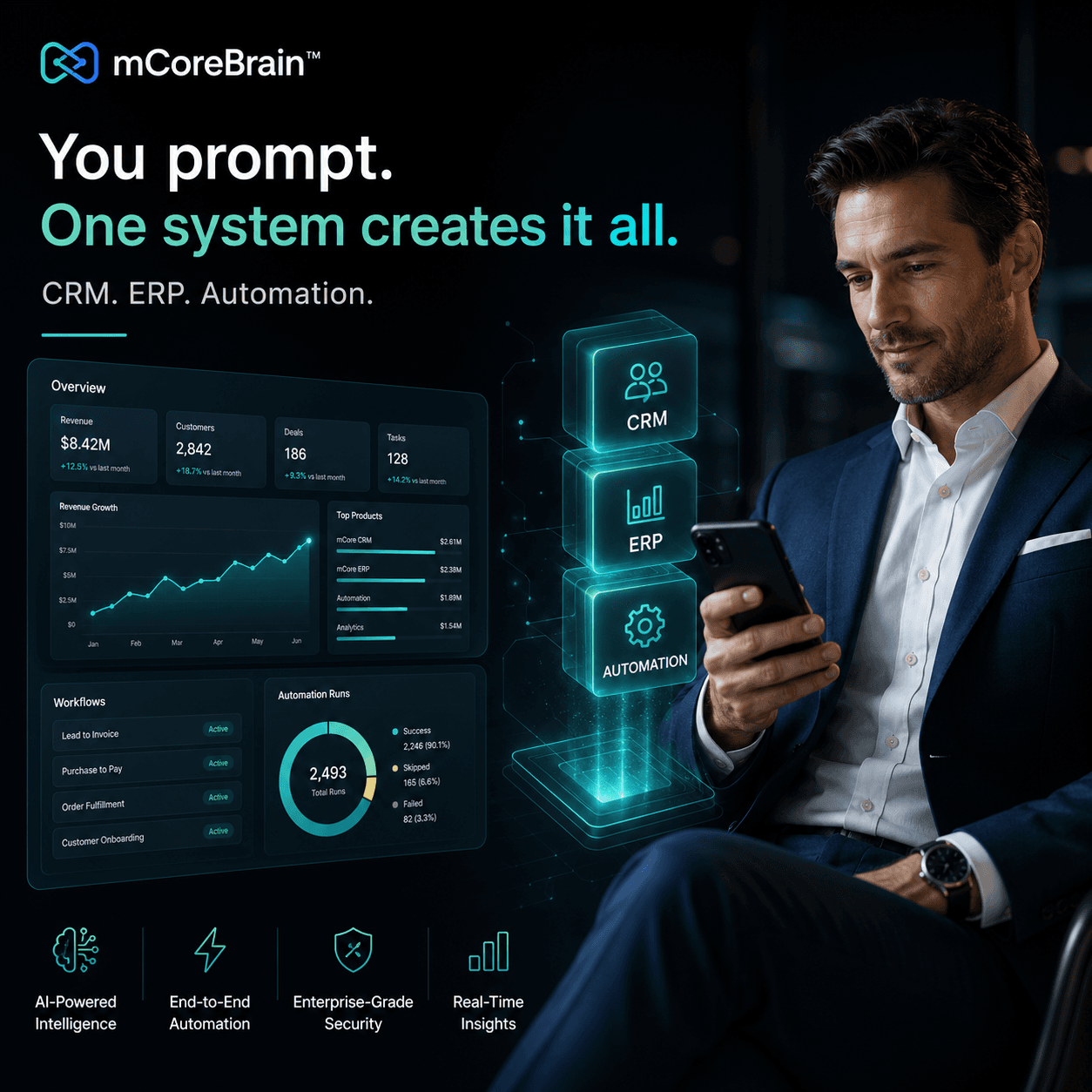
- Automated workflows: when a shipment is picked up, it triggers a tracking notification; when delivered, it auto-generates an invoice
- Real-time KPIs: on-time delivery rate, cost per shipment, driver utilization, fleet margin
Why This Changes Everything
Speed: Your team describes the business need. The system is live the same day. You start capturing better data immediately.
Flexibility: Your pricing changes? Routing rules shift? Compliance requirements update? Modify the system yourself—no IT ticket required. The AI updates workflows in real time.
Cost visibility: Every shipment shows its true profit. You see which customers, lanes, and shipment types make money. You make pricing and capacity decisions based on real data, not guesses.
Compliance: Documentation lives in one place. Proof of delivery, hazmat certificates, and hours-of-service logs auto-sync. Audit trails are automatic. You pass compliance checks without manual scrambling.
Driver experience: Drivers get a clean mobile interface—their route, today's pickups, delivery confirmations. No confusion about which system to check. Retention improves because the experience is frictionless.
Customer transparency: Customers get real-time tracking and automatic invoice delivery. No chasing down proofs of delivery or payment. Cash flow accelerates.
The Real Advantage
Traditional ERP is built for all businesses, which means it's optimized for none. You're paying for 80% of features you don't use and missing 20% that you do.
mCoreBrain is built for your business because the AI understands what logistics operators actually do. You define your workflow once, the system adapts as your business evolves, and you keep full control of the data and the rules.
No license per user. No upgrade cycles. No consultant dependency.
Ready to replace your fragmented logistics stack? Visit mCoreBrain.org to see how to describe your business and deploy your AI-native platform in hours.