How Logistics Firms Track Shipments Without ERP Sprawl
Logistics companies struggle with fragmented systems, manual handoffs, and visibility gaps. mCoreBrain lets you build a unified shipment & fleet management system in hours, not months.

The Logistics ERP Problem
Logistics firms operate on razor-thin margins. A single delayed shipment, a miscommunication between dispatch and drivers, or a lost invoice can cascade into customer churn. Yet most logistics companies are stitched together from five or six different systems: a transportation management tool here, an accounting package there, a spreadsheet-based dispatch system, a separate customer portal, and a legacy database nobody understands anymore.
Each integration costs money. Each data sync is a potential failure point. And when a customer calls asking "where's my shipment?" your team has to log into three different systems to find the answer.
Worse, scaling is paralyzed. Adding a new service line (LTL, last-mile delivery, freight brokerage) means buying new modules, hiring consultants, and waiting months for deployment. By the time you launch, your competition has already moved.
What mCoreBrain Changes
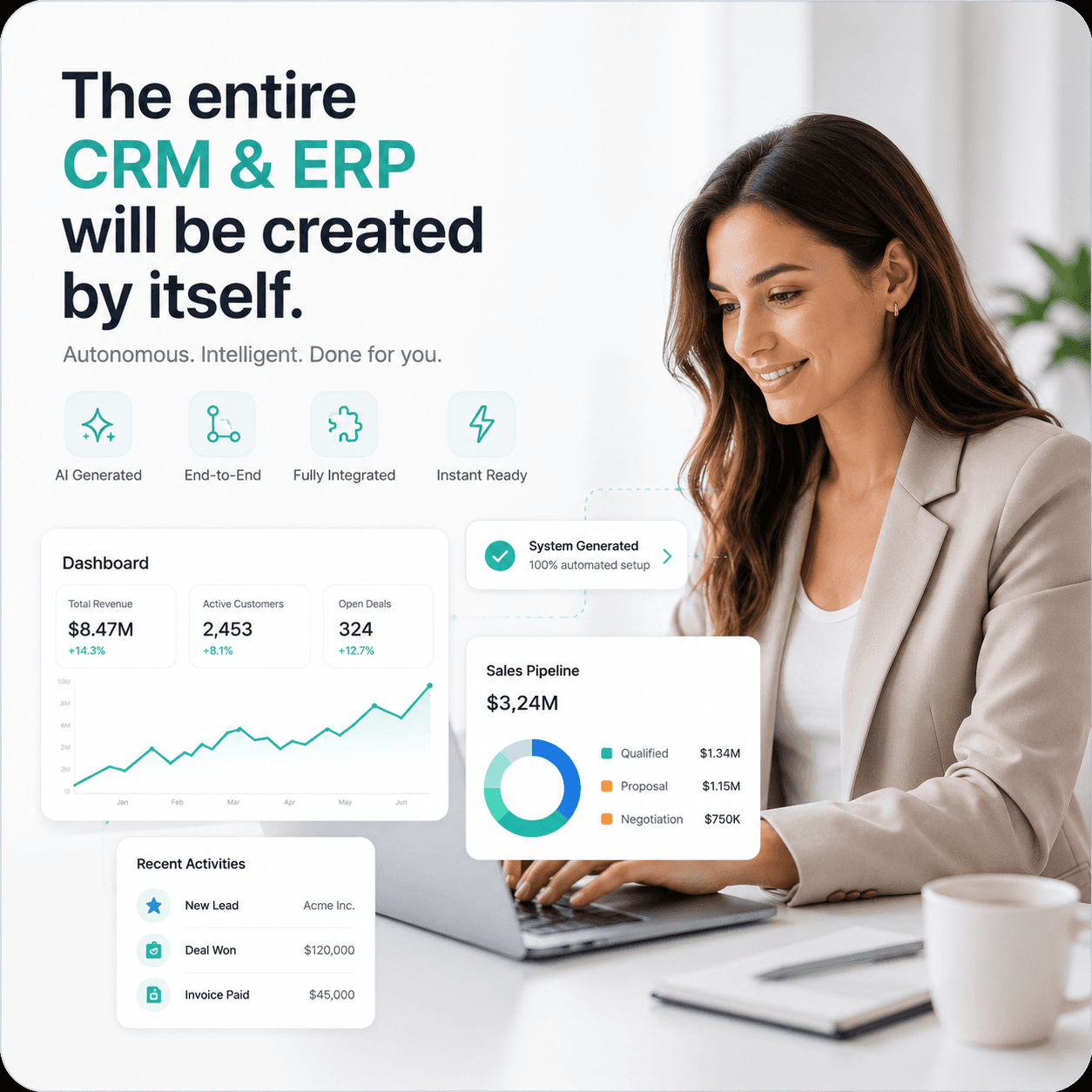
mCoreBrain is built for exactly this problem. Instead of buying pre-built modules and forcing your business into them, you describe your logistics operation in plain language—your shipments, your fleet, your drivers, your billing cycles, your customer tiers—and the AI generates your entire ERP in minutes.
You get:
Unified Shipment Tracking — One source of truth. Real-time status from pickup to delivery. Customer-facing visibility portal without building custom code. Driver assignments, route optimization notes, and delivery proof all tied to a single shipment record.
Fleet & Asset Management — Track vehicles, maintenance schedules, fuel costs, and utilization in real time. Set up automated alerts when a truck is due for service or when a driver exceeds idle time. Link every cost to the shipment or customer that caused it.
Dispatch & Workflow Automation — Define your dispatch rules once ("assign LTL loads to drivers within 50 miles", "escalate missed pickups to the logistics manager"). The system enforces them automatically. No more manual spreadsheets. No more missed handoffs.
Multi-Tier Billing — Handle flat rates, per-mile charges, zone-based pricing, and surcharges without custom invoicing logic. Invoice automatically when a shipment delivers. Tie payments to performance (on-time delivery discounts, damage claims). Generate profitability reports by customer, lane, and vehicle.
Role-Based Operations — Dispatch teams see only active shipments and driver assignments. Drivers see their routes and delivery instructions. Finance sees invoices and payment status. Customers see their shipments. Managers see everything. All from the same system.
The Real Advantage: Speed
Here's what makes mCoreBrain different: when your business changes, your system changes with it.
Adding a new service line (say, cold-chain logistics) isn't a 6-month IT project. You tell mCoreBrain what cold-chain means for you: temperature requirements, inspection workflows, higher insurance costs. The AI generates the new fields, workflows, and reports instantly. You deploy to production the same day.
A customer asks for a custom billing structure? Describe it in plain language. It's live within hours.
Need to add role-based access for a new regional manager? Define the role. Done.
This speed isn't just convenient—it's competitive. You respond to market changes faster than competitors still waiting for their vendor's product roadmap.
Security & Governance
Logistics data is sensitive: customer shipment details, driver information, payment records. mCoreBrain's two-layer architecture separates the admin/configuration layer (where you define your system) from the business user layer (where your team works). Only admins can change the structure. Users can't accidentally break workflows or export restricted data.
You control who sees what. A driver never sees another driver's routes or customer pricing. A customer never sees internal cost data. Finance never sees operational notes meant for dispatch.
Getting Started
Most logistics firms go live in 2–4 weeks:
- Week 1: Describe your core entities (shipments, fleet, customers, drivers) and workflows in a kickoff session.
- Week 2: Review the AI-generated system. Adjust fields, pipelines, and automation rules.
- Week 3: Load historical data. Train your team on the new interface.
- Week 4: Go live and decommission legacy systems.
Why This Matters
Logistics is a process-heavy business that scales fast. You need systems that keep up. mCoreBrain is designed for exactly that: rapid configuration, easy customization, and production-ready infrastructure from day one.
If your current ERP makes you feel trapped—if adding new features requires vendor tickets and IT roadmaps—you're overpaying for inflexibility.
Ready to build a logistics system that actually fits your business? Visit mCoreBrain.org to see how you can generate your entire CRM/ERP by describing your operation in plain language. No code. No consultants. Deploy to production in days.