How Private Equity Firms Win Deals with AI-Native Deal Ops
PE firms waste weeks juggling spreadsheets across diligence, portfolio tracking, and fund management. mCoreBrain replaces that chaos with AI-native deal ops in days, not months.

The Private Equity Deal Operations Crisis
Private equity firms live on deal velocity. Every week lost to system integration or manual data entry is a deal lost to a competitor. Yet most PE teams operate across a patchwork of tools: Excel for cap tables, separate software for investor reporting, CRM for sourcing, ERP fragments for portfolio company management, and custom dashboards held together by spreadsheet wizardry and institutional memory.
The result? Deal teams spend 30–40% of their time moving data between systems instead of analyzing opportunities. Due diligence workflows stall because information sits in email chains. Portfolio companies can't see their own metrics because reporting lags by weeks. Investor relations scrambles to compile fund performance across incompatible data sources.
Traditional CRM and ERP systems make this worse, not better. Implementing Salesforce or SAP at a PE firm takes 6–12 months, costs six figures, and requires deep customization for each unique deal structure, fund vintage, and portfolio company. By the time it's live, deal strategy has shifted three times over.
Why mCoreBrain Changes the Game for PE Operations
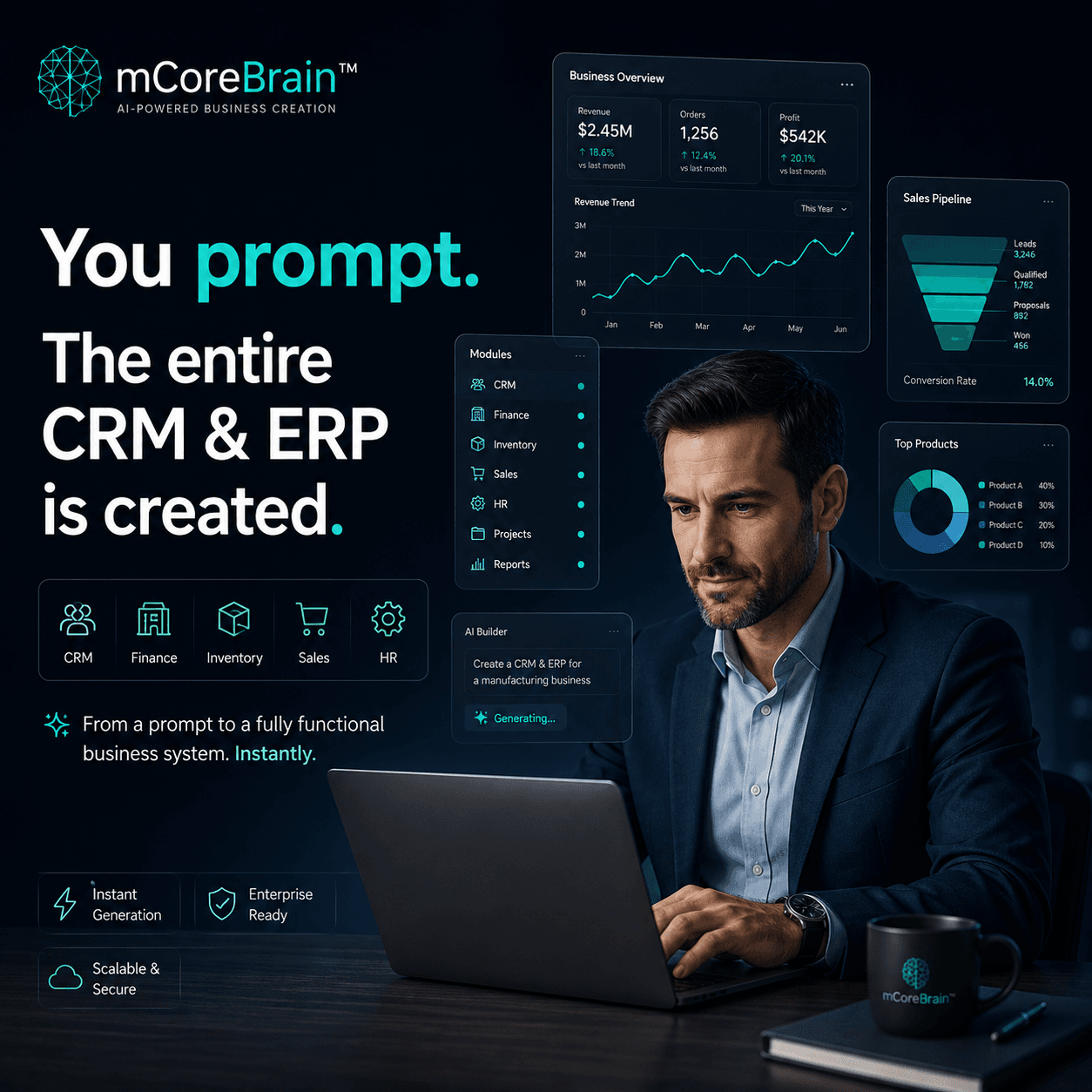
mCoreBrain's prompt-native architecture means you don't configure—you describe. Tell the system: "I need to track deal sourcing, build cap tables, manage investor LPs, track portfolio KPIs, and run fund reporting." mCoreBrain AI generates the full data model, workflows, roles, and dashboards instantly.
This matters for PE because:
Deals move at speed. A new deal sourcing pipeline is live in days, not months. Your team describes the deal structure, ticket size, industry focus, and sourcing channels; mCoreBrain builds the pipeline, scoring logic, and stakeholder visibility automatically.
Due diligence is collaborative. mCoreBrain's governed architecture means due diligence teams (internal, external counsel, accountants, operational advisors) can all work in the same system without accidentally seeing confidential data they shouldn't. Prompt-native roles mean you configure access in plain English: "show this advisor only financials, not cap table changes."
Cap tables stay current. Track equity across ordinary shares, preferred rounds, warrants, and management incentives in a single source of truth. When terms change mid-deal, update once in mCoreBrain; every investor, portfolio company, and stakeholder sees the truth instantly.
Portfolio monitoring is real-time. Don't wait for monthly reporting requests. Define KPIs once (revenue, EBITDA, burn rate, customer concentration, debt covenants) and mCoreBrain tracks them continuously across all portfolio companies. Alerts fire when metrics drift.
Investor reporting scales without headcount. Customize reports per LP tier, fund vintage, or investment strategy. mCoreBrain regenerates them on schedule without manual work. Investors see performance, cash flows, and risk metrics the day they ask.
A Real PE Workflow in mCoreBrain
Month 1: Deal Sourcing. Your partnership team describes their sourcing criteria (sector, revenue range, geography, growth profile). mCoreBrain builds a sourcing CRM with pipeline stages, contact management, and deal scoring. First deal sourced and logged in week one.
Month 1–2: Due Diligence. A deal enters DD. You describe: "I need a deal room where my team logs findings, external advisors upload reports, and everything stays confidential to their role." mCoreBrain creates the workspace, document library, findings tracker, and role-based access instantly. Your finance team runs automated data room checks against the cap table.
Month 2–3: Close. Cap table is final. Post-close, you tell mCoreBrain: "Now track this company's monthly financials, board meetings, and 100-day plan." The portfolio company module spins up with dashboards, document storage, and KPI tracking. Management team logs in, updates metrics, board members see everything automatically.
Month 3+: Portfolio Operations. As the portfolio grows, mCoreBrain scales without new implementations. Add a second fund? Describe it once. Merge portfolio companies? Consolidate their data in days, not weeks. Prepare an exit? mCoreBrain pulls all relevant history—board minutes, financial trends, customer lists—into exit readiness dashboards.
Why This Beats Traditional Systems
Traditional PE stacks require:
- Deal sourcing tool (Salesforce or custom CRM)
- Cap table software (Carta, Pulley, or manual Excel)
- Investor reporting software (separate)
- Financial close tool (NetSuite, SAP, or Excel)
- Portfolio monitoring dashboards (custom-built)
The Bottom Line
PE is fundamentally about making better decisions faster with imperfect information. Every tool that slows decision-making or fragments data costs you deals and returns. mCoreBrain removes system friction, letting your team focus on what matters: sourcing, underwriting, value creation, and exit planning.
Ready to replace your PE tech stack? Visit mCoreBrain to see how PE firms are building deal ops systems in days instead of quarters. Describe your fund structure, and watch your AI-native deal management system come to life in real time.