How Private Equity Firms Track Deals & Due Diligence
PE firms juggle dozens of deal pipelines, endless data rooms, and fragmented workflows. See how prompt-native CRM/ERP centralizes deal tracking, speeds due diligence, and closes more winners.
The Private Equity Deal Problem
Private equity teams live in chaos. Your firm is tracking 20+ potential acquisitions simultaneously—each with its own financial models, cap tables, management interviews, competitive analyses, and compliance checklists. Information sprawls across email threads, shared drives, Excel spreadsheets, and disconnected data rooms. Your partner sends a due diligence update in Slack. Your analyst updates valuation assumptions in a local file. Your legal team uploads new documents to an FTP server. By Friday, nobody knows what's current.
Traditional CRM systems treat PE like a standard sales pipeline. They miss the complexity. ERP platforms demand months of configuration and custom code just to track a single deal structure. You end up hiring a consultant to build half of what you need, then patching it with more spreadsheets.
The result: slow decision-making, missed red flags, and deals that slip through the cracks.
What mCoreBrain Changes
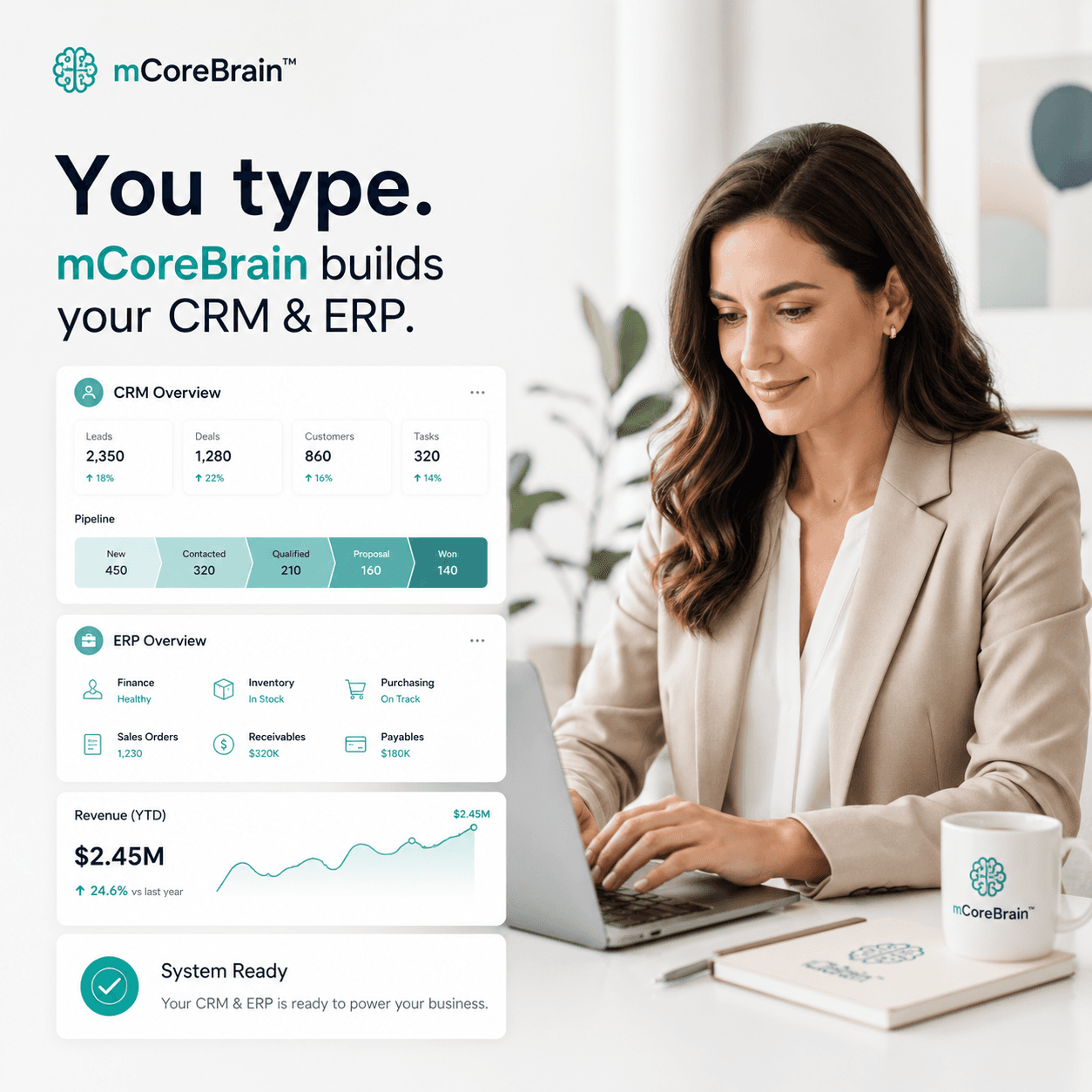
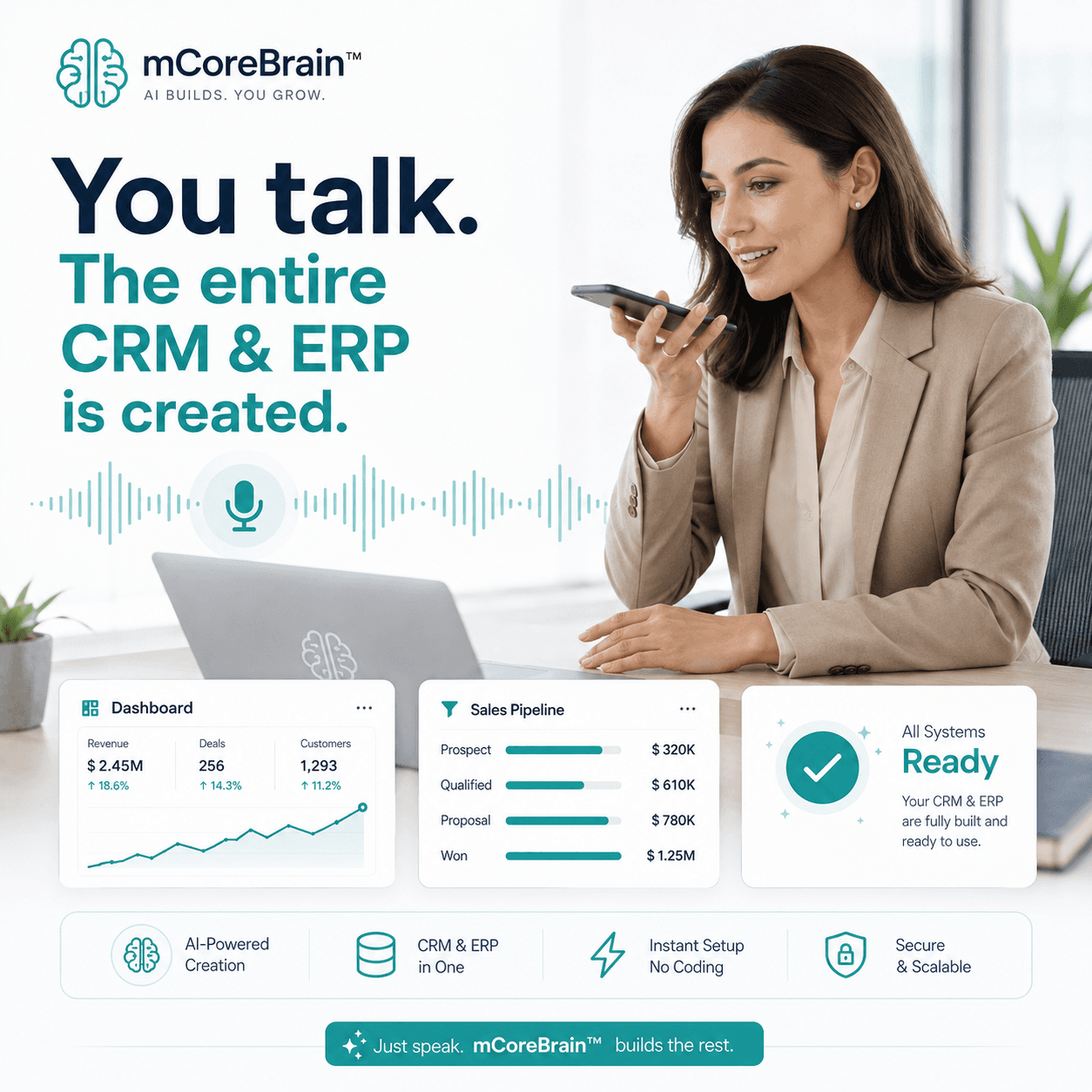
mCoreBrain is built for knowledge-heavy workflows. You describe your deal process in plain language—target screening criteria, due diligence phases, regulatory gates, valuation gates, post-close integration milestones—and the AI generates your entire CRM/ERP in minutes.
Your structure might look like this:
- Deal Record: Company name, industry, revenue, EBITDA, asking price, seller motivation, exclusivity period
- Due Diligence Checklist: Financial audit, tax review, legal review, customer concentration, supply chain risk, environmental compliance, insurance review
- Stakeholders: Sponsor contact, CEO interview date, board observer list, legal counsel, auditor assignments
- Valuation Scenarios: Base case, upside case, downside case with dynamic formula updates
- Deal Status Pipeline: Screening → Initial Diligence → Deep Dive → LOI → Due Diligence → Negotiation → Close
- Document Vault: Links to data room folders, organized by category and version date
- Timeline & Milestones: Exclusivity end date, auditor report deadline, board vote date, close date
Real Workflow: Due Diligence at Scale
Your analyst flags a target in screening. One click creates a Deal record. The system auto-populates a checklist based on your industry and deal size. Your partner assigns team members by role—who handles financials, who handles legal, who interviews management.
As the financial auditor completes their review, they attach the report directly to the Deal record. The system automatically updates the "Financial Audit" checklist item to "Complete." Your legal team can see the same report in context—they don't need a separate email or folder search.
Valuation models live inside the Deal record, not in a separate Excel file. When your analyst updates assumptions, the summary automatically recalculates. Your partner sees the new valuation in the deal pipeline view—no hunting for the latest spreadsheet version.
A red flag surfaces: the customer concentration analysis shows 45% of revenue from one customer. Your team comments directly on the Deal record, assigning a follow-up task to the management team. By next week, the seller provides a new contract commitment. That documentation uploads straight to the vault, and the risk flag is logged with evidence.
When the LOI is signed, deal status moves to "Negotiation." The system automatically notifies your counsel that definitive documents are next and sets a deadline. When you move to "Close," integration milestones populate—100-day plans, org charts, synergy tracking—all pre-built for your deal type.
Why This Beats Legacy Systems
Speed: No waiting for IT to configure fields or build workflows. Your deal tracking is live in hours, not months.
Flexibility: Change your deal process mid-year? Adjust it in plain English. No database migration. No consultant project.
Context: Everything about a deal lives in one place—financial data, documents, stakeholders, timeline, status, and history. No toggling between three systems.
Governance: Admin layer controls deal templates, mandatory fields, and approval gates. Business users work freely within guardrails. Your partner can review any deal in a dashboard; your analyst can update their work without breaking controls.
Scalability: Add LBOs, add sponsored search, add add-on acquisitions. Each deal type can have its own template, all in one system.
Deploy in Production This Week
Your team logs in, describes your deal process and required fields, and mCoreBrain generates your production system instantly. Bring in your existing CRM data if you want. Set role-based access so partners see dashboards, analysts see detailed work, and portfolio companies see their own post-close milestones.
One click deploys to production. Your team is tracking deals by Monday.
Ready to centralize your deal pipeline? Visit mCoreBrain.org to see how PE firms are replacing fragmented workflows with AI-native CRM/ERP. Describe your process, deploy your system, and close deals faster.