How Veterinary Clinics Manage Patients, Owners & Revenue Without Legacy Chaos
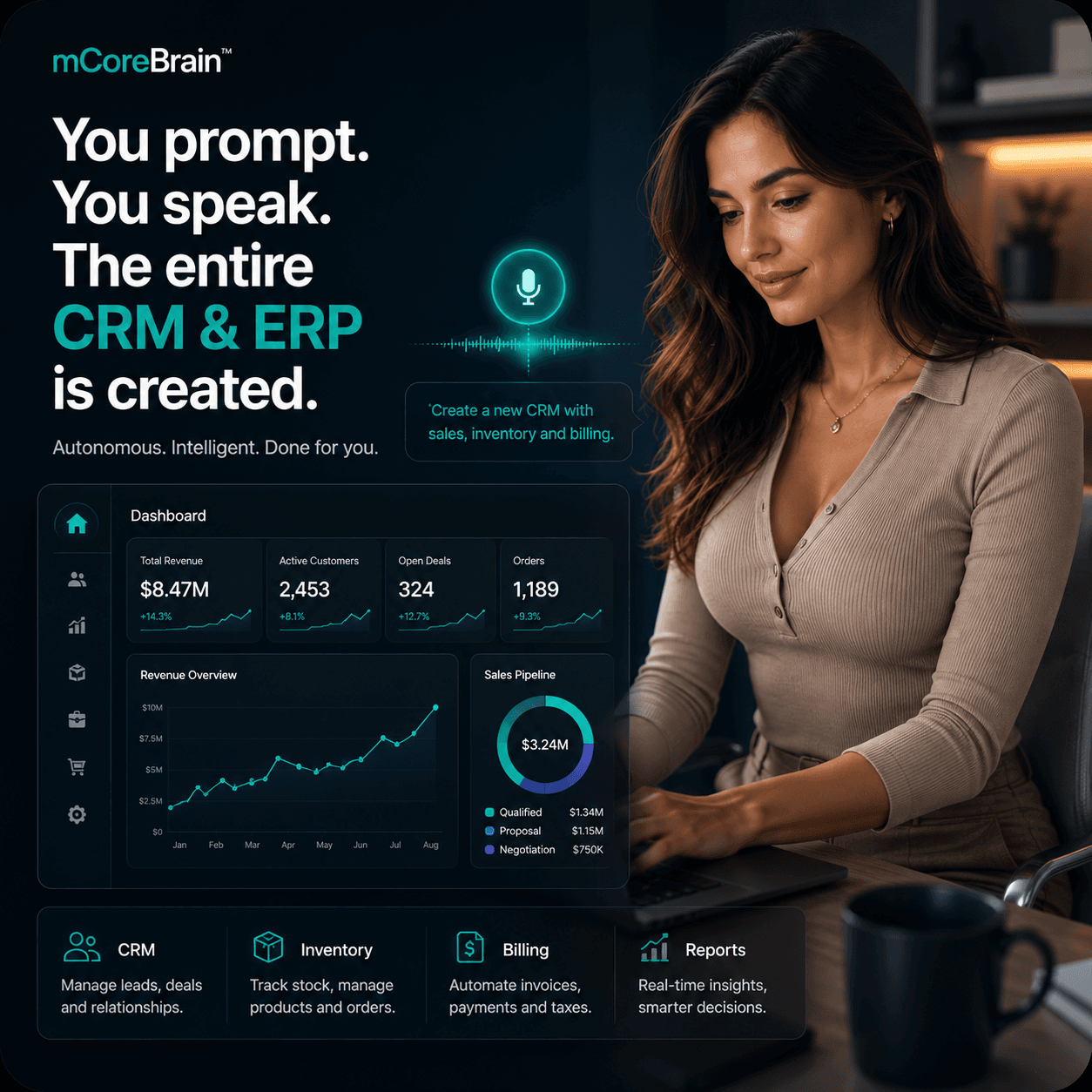
Veterinary practices juggle patient records, owner communication, inventory, billing, and scheduling across disconnected tools. mCoreBrain unifies them in one AI-generated system.

The Hidden Cost of Fragmented Veterinary Practice Management
Veterinary clinics operate at the intersection of healthcare, retail, and service business—each with its own operational demands. A typical practice might use:
- A legacy patient management system (outdated UI, slow queries, expensive per-seat licensing)
- Email or SMS for appointment reminders and owner communication
- A separate accounting package for invoicing and payroll
- Spreadsheets for inventory tracking (vaccines, medications, supplies)
- Manual scheduling tools or paper logbooks
- Disconnected lab result tracking
And scaling? Adding a second location or hiring more veterinarians means duplicating all these systems, training staff on multiple platforms, and managing integration nightmares that were never designed to integrate.
What a Modern Veterinary Clinic Needs
A veterinary practice management system should handle:
Patient & Medical Records
- Complete patient history (species, breed, age, medical conditions, medications, allergies)
- Visit notes, diagnoses, and treatment plans
- Vaccination schedules and compliance tracking
- Lab orders and results tied to patient records
- Alerts for overdue checkups or medication refills
- Appointment booking (online + phone-based)
- Automated reminders (SMS, email, in-app)
- Owner portal to view medical records, book appointments, and request refills
- Follow-up workflows (post-surgery care, chronic condition monitoring)
- Real-time tracking of medications, vaccines, and medical supplies
- Low-stock alerts and automated reorder points
- Cost tracking per procedure (to identify profitability)
- Expiration date management
- Itemized invoicing (consultation, procedures, medications, boarding)
- Payment processing (card, digital wallet, payment plans)
- Insurance claim submission (for clinics handling pet insurance)
- Revenue reports by procedure, provider, or location
- Staff payroll integrated with appointment data
- Role-based access (veterinarian, technician, receptionist, manager)
- Schedule visibility across multiple clinics
- Consolidated reporting across locations
- Compliance tracking (licenses, certifications, continuing education)
The Problem With "All-in-One" Veterinary Software
Existing veterinary management platforms (like Vetsmart, Cornerstone, or IDEXX) offer these features—but they come with steep tradeoffs:
- Expensive licensing: Per-seat costs ($50–$200/user/month) add up fast when you hire new staff
- Long implementation: 3–6 months of setup, data migration, and staff training
- Rigid workflows: If your clinic's process doesn't match the vendor's assumptions, you're stuck
- Poor integrations: Adding payment processors, SMS, or accounting tools requires custom development or expensive middleware
- Vendor lock-in: Switching costs are astronomical; your data is trapped
- Slow innovation: New features arrive once or twice yearly
How mCoreBrain Changes the Game
mCoreBrain is built for exactly this scenario. Instead of fitting your clinic into a pre-built template, you describe your practice in plain language—and the AI generates your entire system.
You might describe it like:
"We manage patients (pets) and owners. Each pet has a species, breed, birthday, medical history, and vaccination schedule. Owners book appointments, which trigger reminder workflows. Appointments create invoices for exams, procedures, medications, and boarding. Staff have roles (vet, tech, receptionist, manager) with different access. We need reports on revenue by procedure and provider, inventory alerts, and owner communication tracking."
mCoreBrain generates:
- Data models for patients, owners, appointments, invoices, inventory, staff
- Workflows for reminders, follow-ups, low-stock alerts, overdue appointment notifications
- Roles & permissions so receptionists can't see payroll, owners can't see other patients' records
- Dashboards showing revenue, appointment utilization, inventory turnover, staff performance
- Mobile access for field visits or after-hours emergencies
- API integrations to payment processors, SMS gateways, or accounting software
When your practice evolves—a new service line, a second location, new compliance requirements—you update your description and the system regenerates. No code, no consultants, no spreadsheet workarounds.
Real-World Impact
For a 10-person veterinary clinic:
- Time savings: Staff stop manual data entry and reconciliation—reclaim 10–15 hours/week
- Revenue recovery: Fewer missed appointments, better pricing visibility, faster invoicing
- Scalability: Add a second clinic without duplicating systems or budgets
- Compliance: Automated tracking of staff licenses, vaccine inventory expiration, medical record retention
- Owner experience: Online booking, automated reminders, patient portal visibility
The Future of Veterinary Practice Management
Veterinary medicine is a knowledge business—the clinic's core asset is expertise, relationships, and data. The software should enable that, not constrain it.
AI-native systems like mCoreBrain flip the model: instead of forcing practices into rigid pipelines, they adapt to your workflow and grow with you.
If your clinic is still managing multiple systems, wrestling with spreadsheets, or watching revenue slip through gaps—it's time to rebuild.
Ready to simplify your veterinary practice?
Describe your clinic's workflow in plain language and let mCoreBrain generate your complete management system. No code, no consultants, no six-month rollout. Start building for free at mCorebrain.org and see your system live in minutes.