How Recruitment Firms Fill More Roles Without Losing Candidates
Recruitment firms waste hours juggling spreadsheets, email threads, and disconnected tools. mCoreBrain unifies candidates, placements, and team workflows in one AI-native system.
The Recruitment Crisis: Losing Candidates to Chaos
Recrutment is a race. The best candidates disappear within hours if they don't hear back. Yet most recruitment firms still operate on spreadsheets, email forwarding, and mental notes.
A candidate applies. Their resume lands in someone's inbox. Days pass. They follow up. No one responds because the hiring manager didn't see the email. The candidate accepts another offer. You've lost them.
Meanwhile, your team is drowning:
- No single source of truth: Candidate info scattered across email, LinkedIn, old CRMs, and notebooks
- Missed follow-ups: No automatic reminders for interview prep, offer negotiations, or onboarding
- Poor handoff between roles: Client managers, recruiters, and HR don't know who's talking to whom
- No visibility into pipeline: "How many candidates are in offer stage?" requires 20 minutes of digging
- Placement failures: You place someone, but have no structured way to check in at day 30, 90, or 180—leading to costly early departures
Why Traditional CRMs Don't Fit Recruitment
You might think Salesforce or HubSpot would solve this. They won't.
Standard CRMs are built for linear sales pipelines: lead → prospect → customer. Recruitment is messier. A candidate might:
- Apply for Role A, not be ready yet, become perfect for Role B in three months
- Interview with Company X, fail, but fit Company Y's team perfectly
- Negotiate salary for two weeks, then ghost
- Accept an offer, start, and we need to track their 90-day performance
How mCoreBrain Changes Recruitment Operations
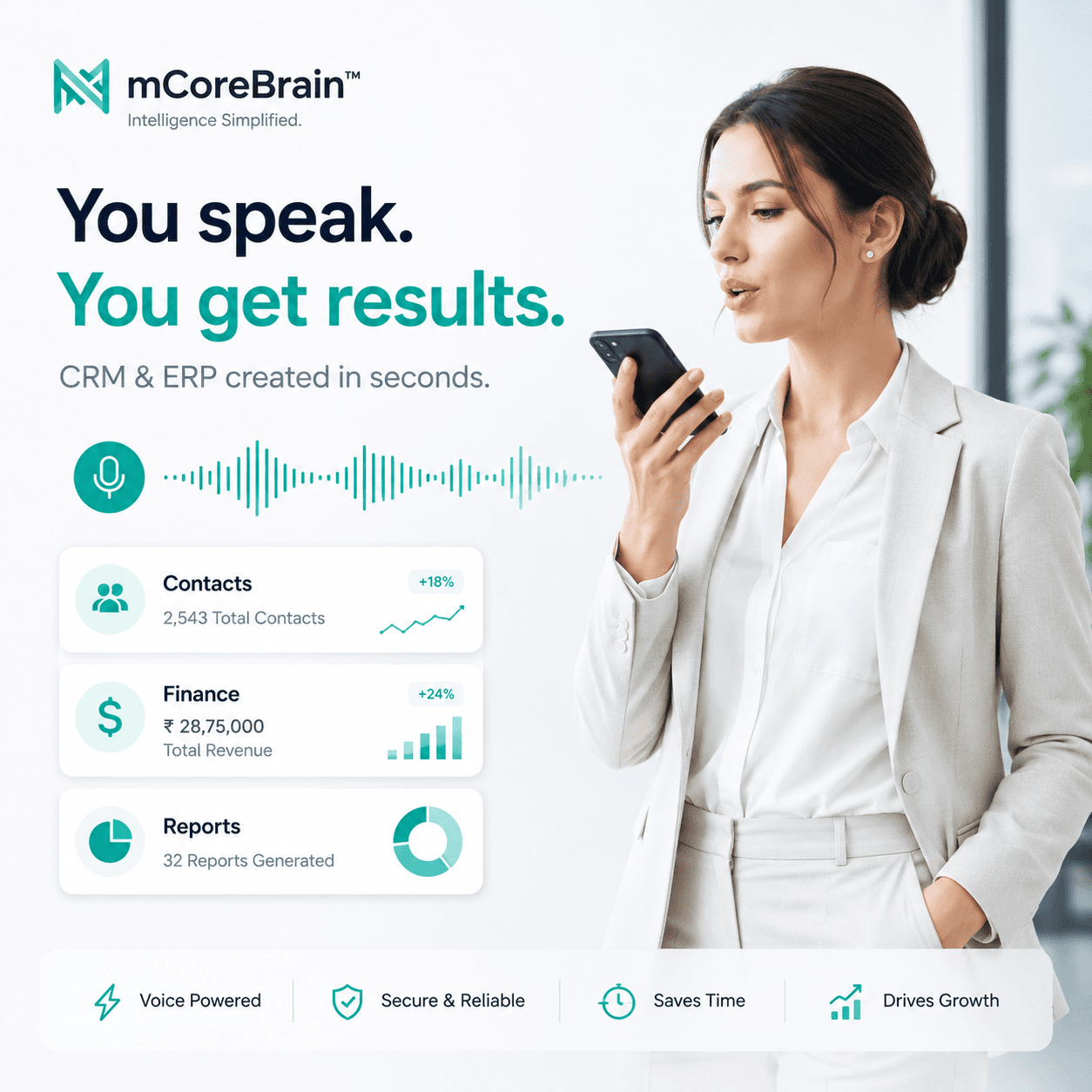
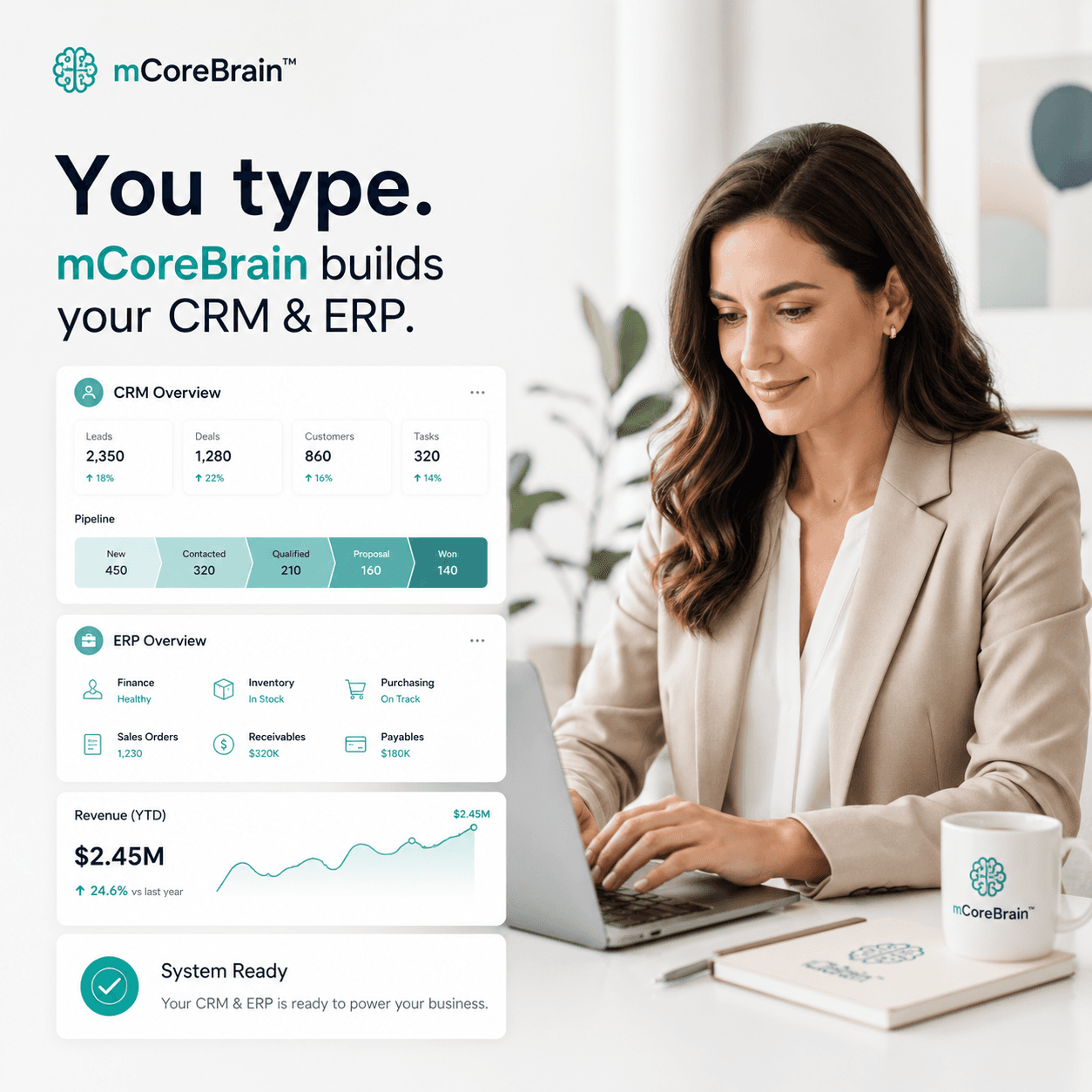
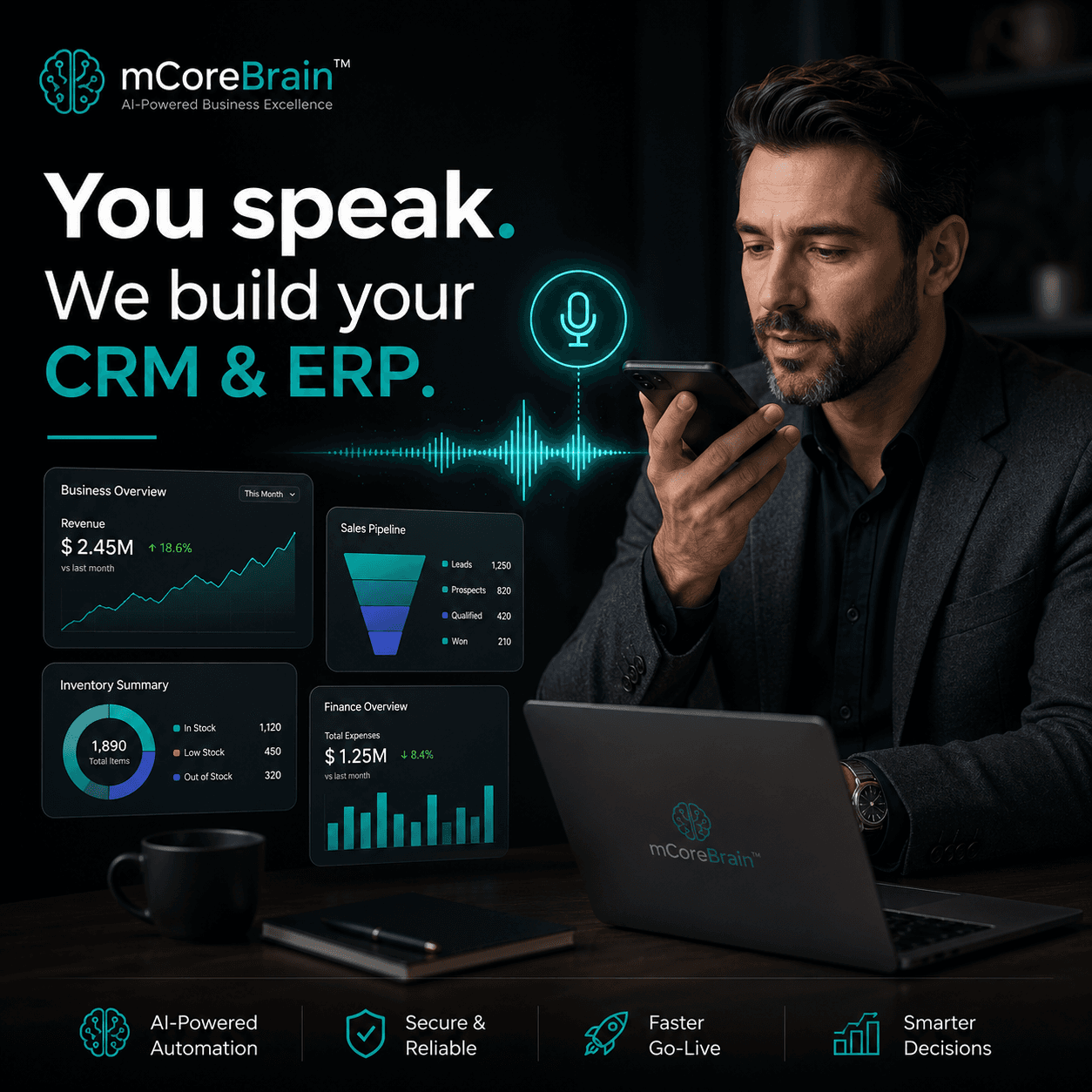
With mCoreBrain, you describe your recruitment workflow in plain language, and the AI generates your entire system instantly.
Here's what unfolds:
Unified Candidate Management
Every candidate lives in one record: their background, applications, interview history, salary expectations, availability, and notes from every team member. No more hunting through email threads.Automatic Follow-Up Workflows
Set rules once. If a candidate hasn't heard back in 48 hours, they get an email. If they're in offer stage for more than 5 days, your account manager gets a reminder. If they accept and start, a 30-day check-in task auto-generates for your client success team.Client-Candidate-Recruiter Alignment
Your placement pipeline shows:- Open roles at each client (and their urgency)
- Active candidates matched to those roles
- Interview schedules with interview feedback captured in real time
- Offer details and negotiation status
- Placements with start dates and early performance flags
Role-Based Visibility
Recruiter can't see salary data. Client manager can't modify candidate notes. Admin can't change offer terms. Your governance rules lock down who sees and does what—without IT involvement.Embedded Analytics
At a glance:- Time-to-fill by role type
- Recruiter conversion rates
- Placement retention at 30/90/180 days
- Repeat client rates
Deployment: One Day, Not Six Months
Traditional CRM implementation is brutal for a lean recruitment firm:
- Gather requirements (weeks)
- Configure fields and workflows (weeks)
- Migrate messy historical data (weeks)
- Train staff (days)
- Go live (prayer)
- Describe your process: "We have candidates, clients, job orders, interviews, offers, and placements. When a candidate interviews, we capture feedback and flag culture fit. When we place someone, we track their start date and set up check-ins."
- AI builds it: Modules, fields, workflows, email automation, reports—all generated in real time
- Customize on the fly: Need to add "background check status"? Just ask in plain language
- Deploy to production: One click. You're live today, not in Q3
The Business Outcome
Recruitement firms using AI-native systems typically see:
- Faster placements: Structured workflows + reminders = no candidates slip through
- Higher retention: Built-in check-ins catch problems early
- Better team velocity: Recruiters spend time recruiting, not admin
- Happier clients: Faster fills, better communication, no surprises
- Scalable growth: You can hire more recruiters without proportional overhead
Start Today
Your recruitment process is unique. Your CRM should be too—built instantly, not configured over months.
Ready to close more placements? Head to mCoreBrain.org and describe your recruitment workflow. The AI will generate a live, fully-operational CRM for your firm in minutes. No code. No consultants. No spreadsheets.