How Architectural Firms Manage Projects Without Legacy Chaos
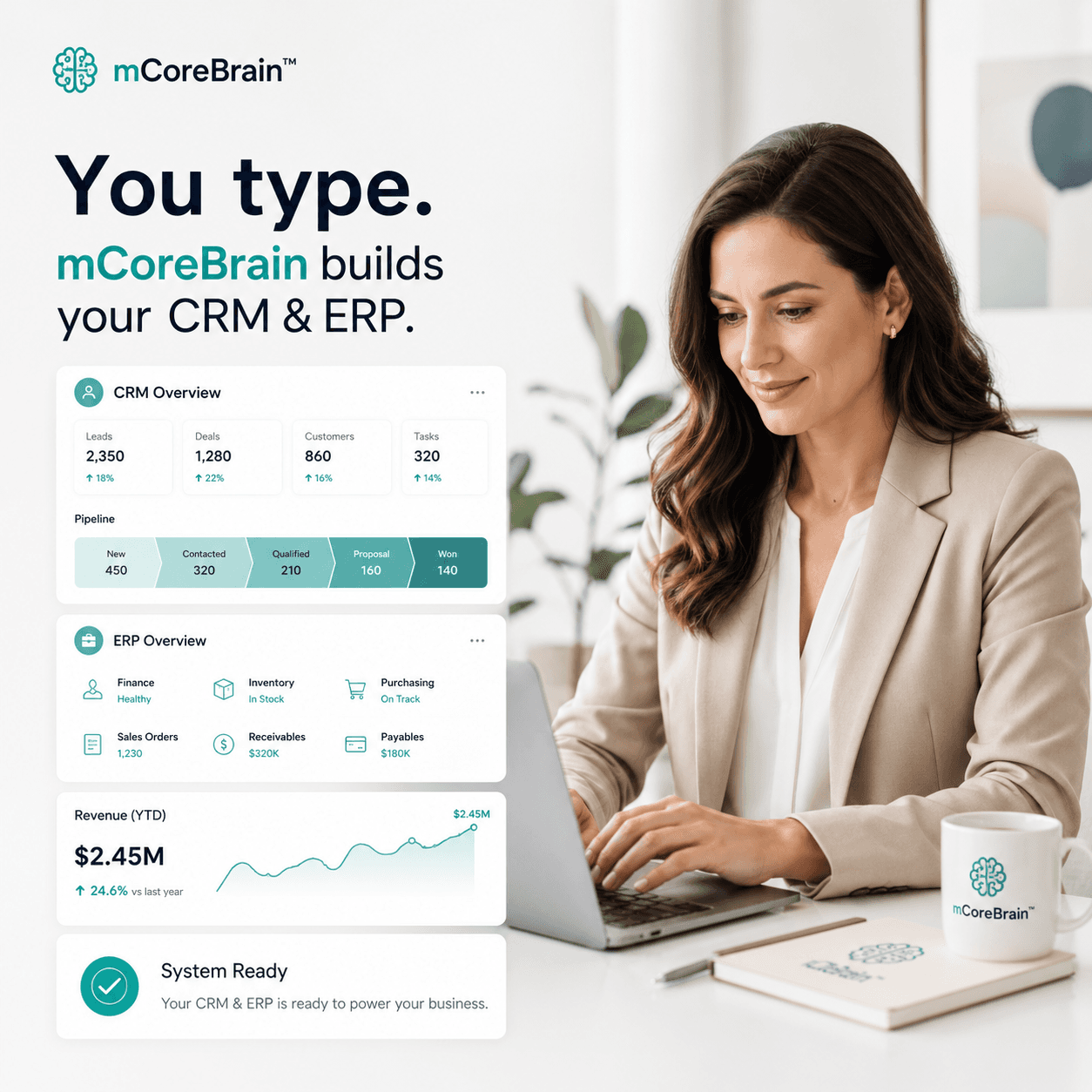
Architectural firms juggle clients, designs, budgets, and timelines across multiple tools. mCoreBrain lets you manage the entire project lifecycle in one AI-native system.

Architectural firms live in a unique business tension: they are part creative studio, part project delivery machine, part financial operation. A single project can span months or years, involve dozens of stakeholders, multiple design revisions, budget tracking, resource scheduling, and compliance documentation.
Yet most architecture firms still manage this chaos across disconnected tools—AutoCAD for design, spreadsheets for budgets, email for client communication, accounting software for invoicing, and whatever project management app they last evaluated three years ago.
The result? Missed deadlines, budget overruns, client miscommunication, and junior architects spending hours copying data between systems instead of designing buildings.
The Architecture Firm's Real Problem
Traditional CRM and project management tools were built for sales teams or generic teams. They don't understand architecture's workflow:
- Design phases aren't linear sales stages. A project doesn't move from "Lead" to "Proposal" to "Won." It moves through schematic design, design development, construction documents, bidding, and construction administration—with client feedback loops and revisions at each stage.
- Budgets are project-based, not revenue-based. You need to track labor hours per phase, consultant costs, reimbursable expenses, and profitability—all tied to deliverables, not just invoice amounts.
- Stakeholders are embedded, not just external. Clients, consultants (structural, MEP, landscape), contractors, and municipalities all have access needs. You can't manage this in a simple contact database.
- Compliance is built-in. Depending on jurisdiction and project type, you need audit trails, signed approvals, code compliance checklists, and documentation that persists.
Why mCoreBrain Solves This
mCoreBrain is built for exactly this kind of complexity—because you describe your business in plain language, and the AI generates the system you actually need.
Instead of forcing architecture into Salesforce's sales-funnel model, you describe your business:
"We manage architecture projects through five phases: Schematic Design, Design Development, Construction Documents, Bidding, and Construction Admin. Each phase has deliverables, approval gates, and budget milestones. We track labor by employee and consultant, manage client feedback loops, and invoice on completion of phases."
The AI generates:
- Custom project pipeline with architecture-specific stages and approval workflows
- Labor and expense tracking tied to project phases and deliverables
- Multi-stakeholder portal where clients, consultants, and contractors see only what they need
- Document management with version control and sign-off trails
- Budget tracking and profitability analysis by project, phase, and resource
- Role-based access: principals see financials, project managers see timelines and budgets, architects see deliverables and feedback, clients see status and approvals only
A Real Workflow
Here's what happens when a client inquiry arrives:
- Initial contact → Client record created automatically with project details
- Proposal stage → AI generates proposal template, tracks client feedback, captures scope and fee
- Project kickoff → Schematic Design phase opens; team structure auto-populated; budget allocated by phase and labor category
- Monthly tracking → Architects log hours; expenses are captured; progress against budget is visible in real time
- Phase gate → Deliverables checklist; client sign-off workflow; automatic notification to next phase team
- Invoicing → Auto-generated from completed phases; tied to approved deliverables
- Construction admin → Change orders, site visits, closeout documentation—all in the same system
The Numbers That Matter
Architectural firms typically see:
- 30–40% reduction in admin overhead (no data entry, no tool switching)
- Better project margin visibility (catch overruns in real time, not in closeout)
- Faster billing (invoices auto-generated from deliverables, not manually compiled)
- Improved client satisfaction (transparency, predictable communication, no missed approvals)
- Easier compliance (all decisions and approvals logged; audit trail built-in)
Why Not Legacy Tools?
Salesforce, HubSpot, and Monday.com can be customized to fit architecture—eventually. But "eventually" means months of implementation, custom development, tens of thousands of dollars, and a system that still feels like a square peg in a round hole because it was designed for something else.
mCoreBrain starts with your architecture business. The system is born understanding phases, deliverables, budgets, and stakeholder roles. You launch faster, adapt easier, and keep more of your budget in your pocket.
Next Step
If your firm is tired of managing three tools to do one job, visit mcorebrain.org and describe your project workflow in plain language. Watch the AI generate your architecture project management system in minutes. Then deploy it to your whole team with one click. That's how modern architecture firms work.