How Event Planning Firms Manage Venues, Vendors & Clients in One System
Event planners juggle hundreds of moving parts across vendors, venues, and timelines. mCoreBrain eliminates spreadsheets, email chains, and manual coordination—letting you focus on delivering exceptional events.
The Event Planning Coordination Nightmare
Event planning is fundamentally a coordination business. A single wedding, conference, or product launch involves dozens of moving pieces: vendor contracts, venue details, guest lists, timelines, budgets, team assignments, and client communication.
Traditionally, event planners manage this chaos through:
- Spreadsheets tracking vendors, timelines, and budgets (prone to errors and version conflicts)
- Email threads scattered across inboxes, losing critical details
- Manual status updates to clients, creating delays and miscommunication
- Siloed tools — a CRM here, a project tracker there, accounting software elsewhere
- Hours of admin work instead of strategic planning
Why Traditional CRM/ERP Fails Event Planners
Salesforce and HubSpot work for transactional sales pipelines. SAP and NetSuite are built for manufacturing and finance. Neither understands the event planner's workflow:
- Events are time-bound projects with cascading dependencies
- You need vendor management, not just lead scoring
- Client communication and real-time updates matter more than automated drip campaigns
- Budget tracking, timeline synchronization, and team coordination happen in parallel, not sequentially
How mCoreBrain Changes the Game
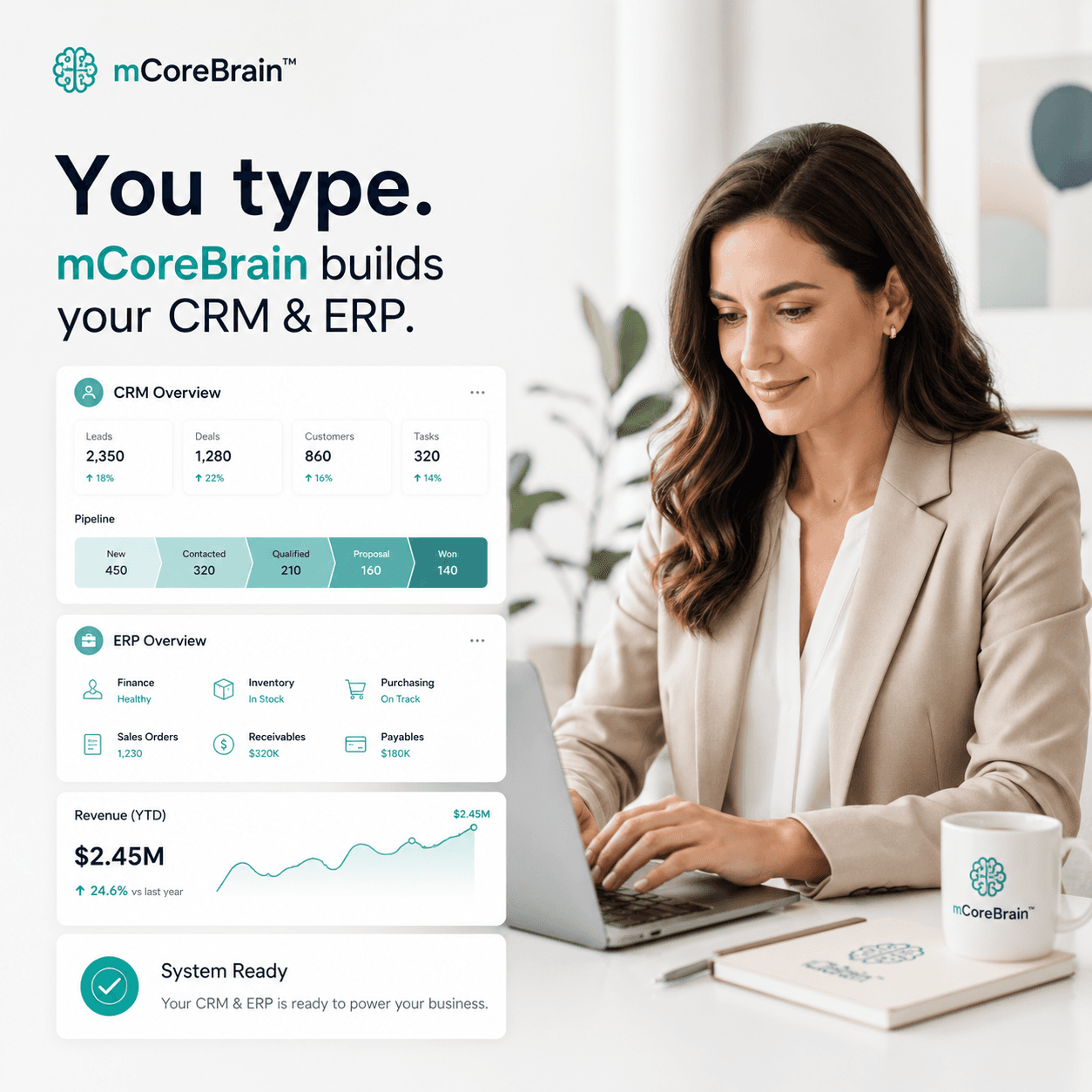
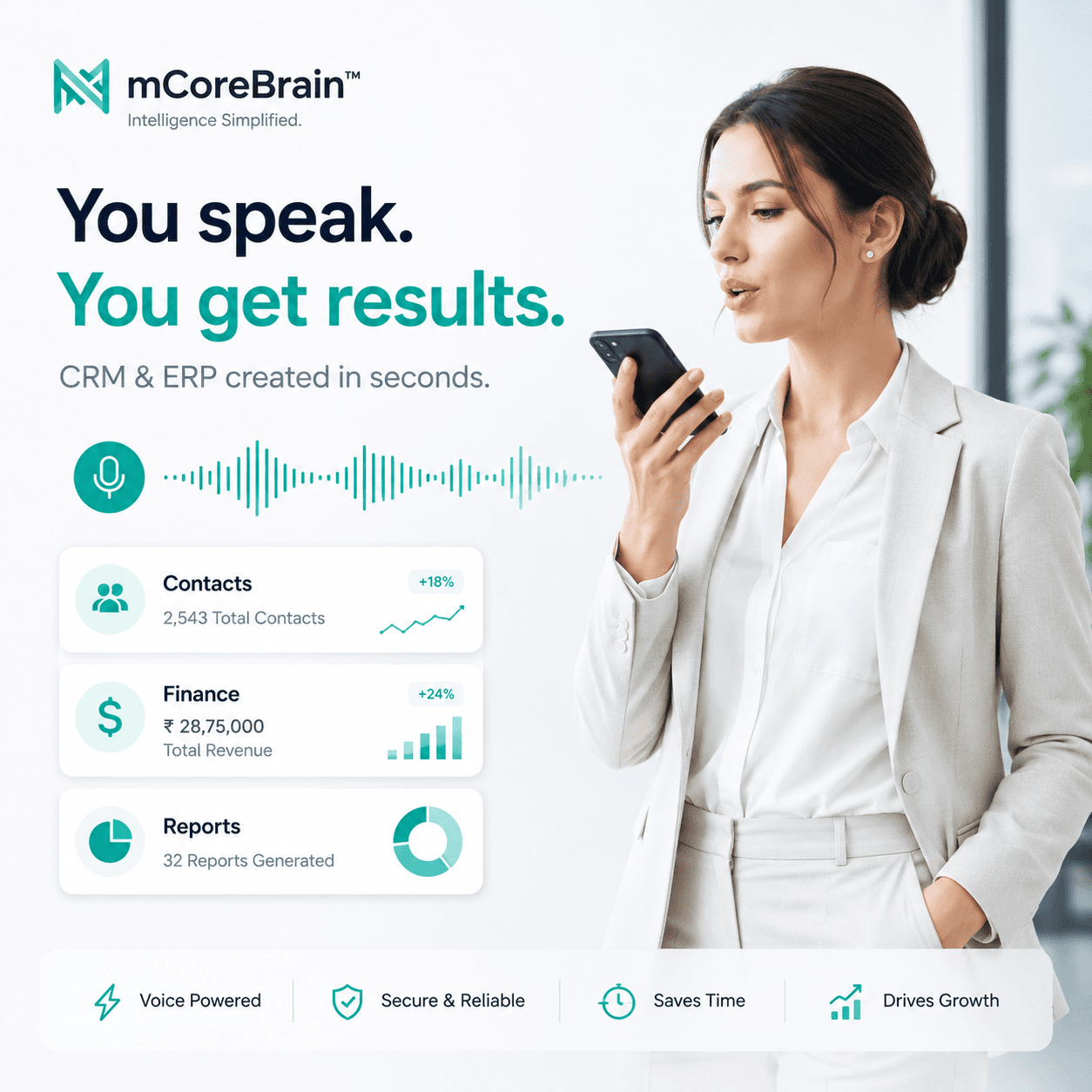
mCoreBrain's prompt-native architecture lets you describe your event business in plain language, and the AI generates your entire system in real time.
Here's what you get:
One Unified System for Everything
Instead of jumping between tools, your entire event operation lives in one place:
- Event projects with timelines, milestones, and task dependencies
- Vendor management — contracts, rates, availability, performance history
- Venue tracking — capacity, amenities, setup requirements, logistics
- Client profiles — budget, preferences, communication history, event details
- Budget & expense tracking — real-time cost vs. actual spend
- Team assignment — who owns what, role-based access, accountability
- Communication logs — all client interactions in one searchable record
Instant Customization Without Code
You don't describe your business to developers. You describe it to mCoreBrain's AI:
"I need to track wedding events with bride/groom info, multiple vendors (catering, florist, photographer), venue bookings, guest RSVPs, a timeline from booking to post-event follow-up, and a budget dashboard."
The system generates:
- Custom fields for bride/groom, vendor types, RSVP status
- Automated workflows (e.g., send vendor confirmations 60 days before event)
- Role-based views (your team sees tasks; vendors see relevant details only)
- A dashboard showing budget health, timeline progress, and outstanding items
Governed AI in the Background
mCoreBrain's two-layer architecture keeps your operation secure and controlled:
- Admin/config layer — you define rules, workflows, access controls
- Business user layer — your team and vendors interact with a clean, intuitive interface
- Auto-populate vendor details from contracts
- Flag timeline conflicts before they become disasters
- Sync budget updates across all stakeholders
- Generate client status reports automatically
- Send reminders to team members for outstanding tasks
Real-World Example: A 50-Event Planning Firm
Imagine managing 50 concurrent events (weddings, corporate events, galas) with a team of 8 coordinators:
- Before mCoreBrain: One coordinator per 6–8 events, spending 30% of time on admin, frequent vendor miscommunications, budget surprises, and client complaints about delayed updates.
- After mCoreBrain: Same 8 coordinators manage 50 events. Real-time dashboards show which events are on track, which need attention. Vendors get automated confirmations and reminders. Clients see event progress in a portal. Budget overruns are caught immediately. Team works on strategy and client relationships, not spreadsheets.
Why This Matters Now
The event industry is post-pandemic competitive. Clients expect:
- Real-time communication — they want to know their event is on track
- No surprises — budget and timeline transparency
- Professionalism — seamless coordination across all vendors
- Flexibility — quick pivots when things change
The Path Forward
Building an AI-native business system doesn't require:
- Months of implementation
- Custom code
- A technical team
- Massive upfront investment
The future of event planning isn't more spreadsheets or more tools. It's one unified, AI-driven system that handles coordination, freeing you to focus on what you do best—creating unforgettable events.
Ready to eliminate the chaos? Head to mcorebrain.org and describe your event business. Your AI-native CRM/ERP will be ready to deploy in minutes.