How Healthcare Clinics Manage Patient Care & Revenue
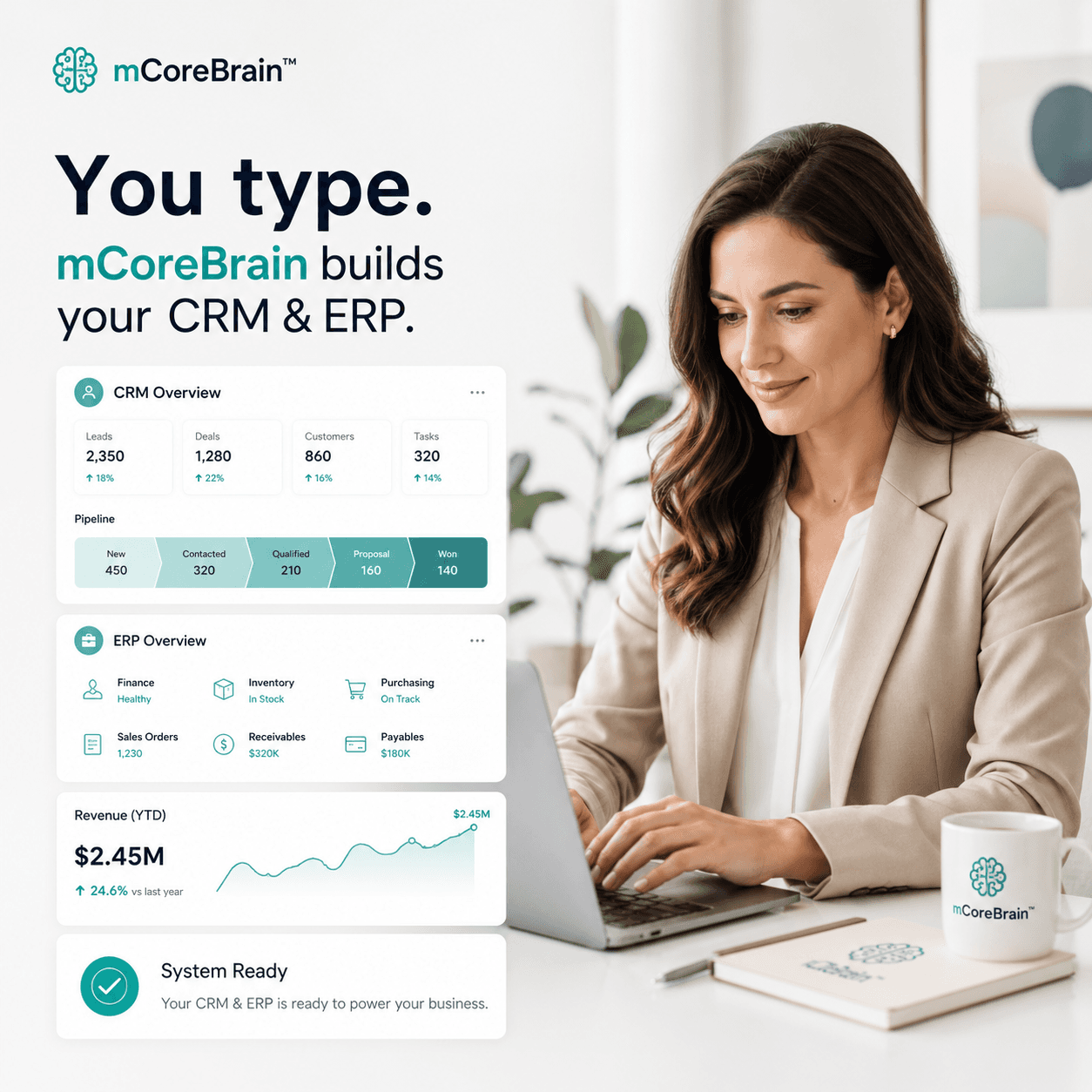
Healthcare clinics need to juggle patient records, appointment scheduling, billing, and compliance—all without legacy software slowdowns. mCoreBrain lets you build a clinic system in hours, not months.

The Healthcare Clinic Problem: Systems That Get in the Way
A mid-sized clinic typically runs on 4–6 disconnected platforms: an EMR for patient records, a separate scheduling tool, a billing system, an insurance verification service, and maybe a custom spreadsheet for referral tracking. Data lives in silos. Staff double-enter information. Billing claims get delayed because the EMR doesn't talk to the revenue cycle system. Patient experience suffers. Compliance risk goes up.
Traditional ERP and medical software require 6–12 months of implementation, $100k+ in consulting fees, and deep technical expertise. By the time you go live, the software is already outdated and your team is frustrated.
What Clinics Actually Need
Healthcare workflows are complex but logical:
- Patient intake & records: demographics, medical history, allergies, insurance
- Appointment scheduling: availability, wait-lists, reminders, no-shows
- Clinical workflows: visit notes, orders, lab results, prescriptions
- Billing & claims: charge capture, insurance verification, claim submission, payment posting
- Compliance & audit trails: HIPAA logging, access controls, data retention policies
- Reporting: utilization rates, revenue by provider, patient satisfaction, no-show trends
How mCoreBrain Solves This
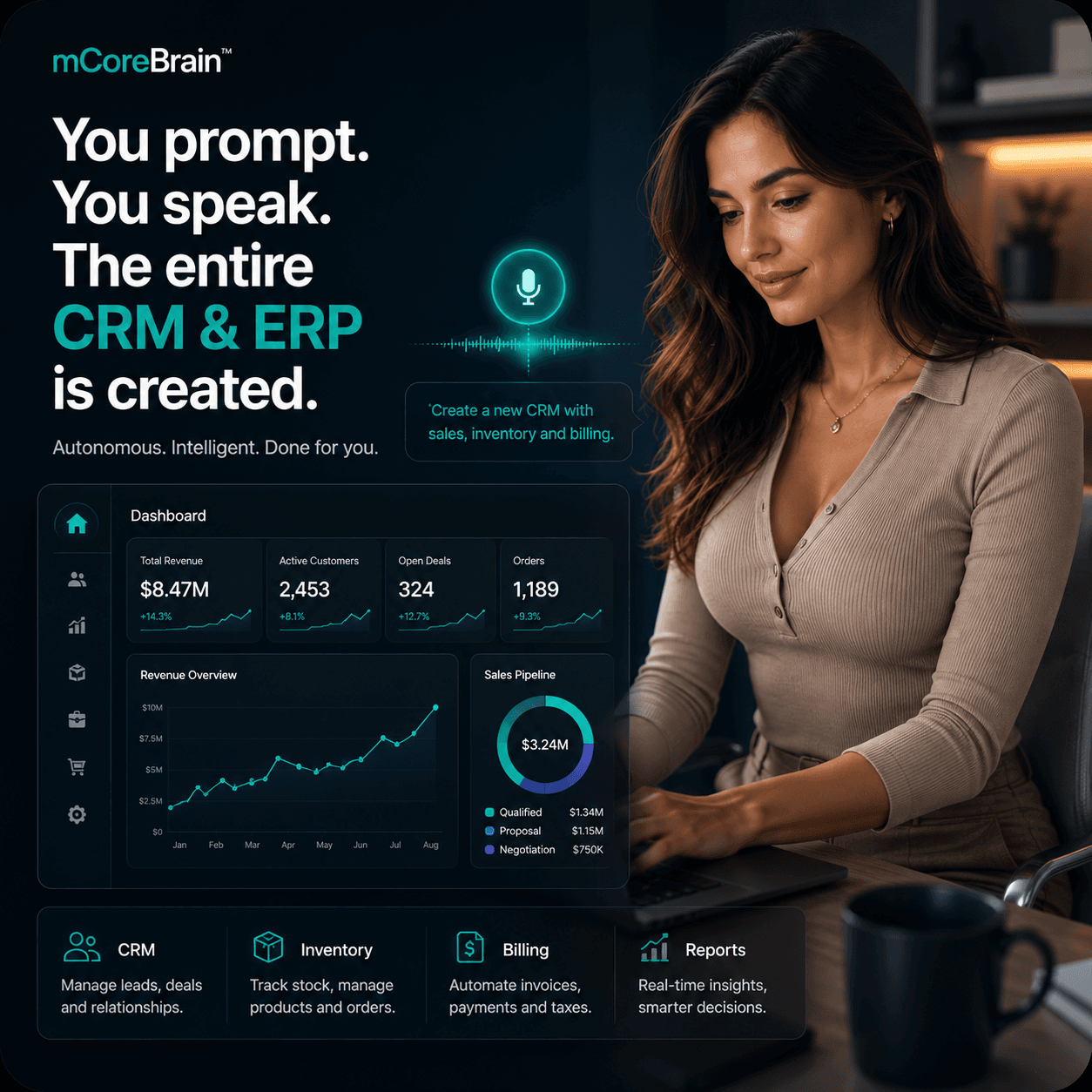
Describe your clinic workflow in plain language. Tell mCoreBrain: "We see patients by appointment. Each visit generates clinical notes and billable charges. We bill insurance first, then the patient. We need to track no-shows and follow-ups." The AI generates your entire system—modules, fields, workflows, user roles, and dashboards—in real time.
Set governance rules without code. You control who sees what data. Billing staff don't access clinical notes. Providers can't modify their own charges. Patient data is encrypted and logged. All HIPAA-compliant by default.
Integrate with your existing tools. mCoreBrain connects to your lab, imaging, and pharmacy vendors. Patient records sync automatically. No more manual faxing or phone calls.
Deploy to production in hours, not months. No implementation partners. No vendor lock-in. One click and your clinic is live.
A Real-World Scenario
A 5-provider family medicine clinic was managing appointments in Google Calendar, storing charts in three separate EMR vendors' systems, and running billing through a legacy DOS-based system from 1998. When a patient called to schedule a follow-up, the front desk had to check three different systems to find the right provider.
With mCoreBrain, the clinic described its workflow:
- "New patients fill out intake forms (digital or paper). Existing patients check in via kiosk. Providers see appointments and notes. Each visit auto-generates a charge. Insurance eligibility is checked at check-in. We bill within 24 hours. We want reports on revenue per provider and patient satisfaction."
- A patient intake module with customizable forms
- An appointment calendar with provider availability and patient auto-reminders
- A clinical notes template (customizable by visit type)
- An automated charge-capture workflow
- Insurance eligibility checks (integrated with a third-party API)
- Role-based dashboards for providers, front desk, billing, and management
- Audit logs for all patient data access (HIPAA compliance built-in)
Why This Matters
Healthcare is under pressure. Reimbursement rates are dropping. Patient expectations are rising. Burnout is high because providers spend more time on paperwork than on patients. Operational inefficiency is bleeding revenue.
A system built for your clinic—not some generic enterprise software—lets your team focus on patient care instead of fighting software. Billing gets faster. Compliance gets easier. Data quality improves. Patient experience improves.
And if your clinic's workflow changes (new service line, new compliance rule, new integration), mCoreBrain adapts. You describe the change; the AI updates the system. No waiting for vendor roadmaps. No paying for custom development.
The Path Forward
If you're a clinic director, CFO, or practice manager wrestling with legacy systems, tool sprawl, or rising operational costs, it's time to ask: Why are we still using software built for generic businesses, not healthcare?
mCoreBrain is built for teams that run on workflows, not spreadsheets. Whether you're a single-location clinic or a multi-site network, you can describe your business and deploy a fully functional, compliant system in days.
Ready to simplify your clinic operations? Visit mCoreBrain.org to see how your clinic workflow could be automated, compliant, and live by next week. No demos. No endless calls with vendors. Just describe what you do, and let AI build your system.