How M&A Advisory Firms Track Deals Without Legacy Chaos
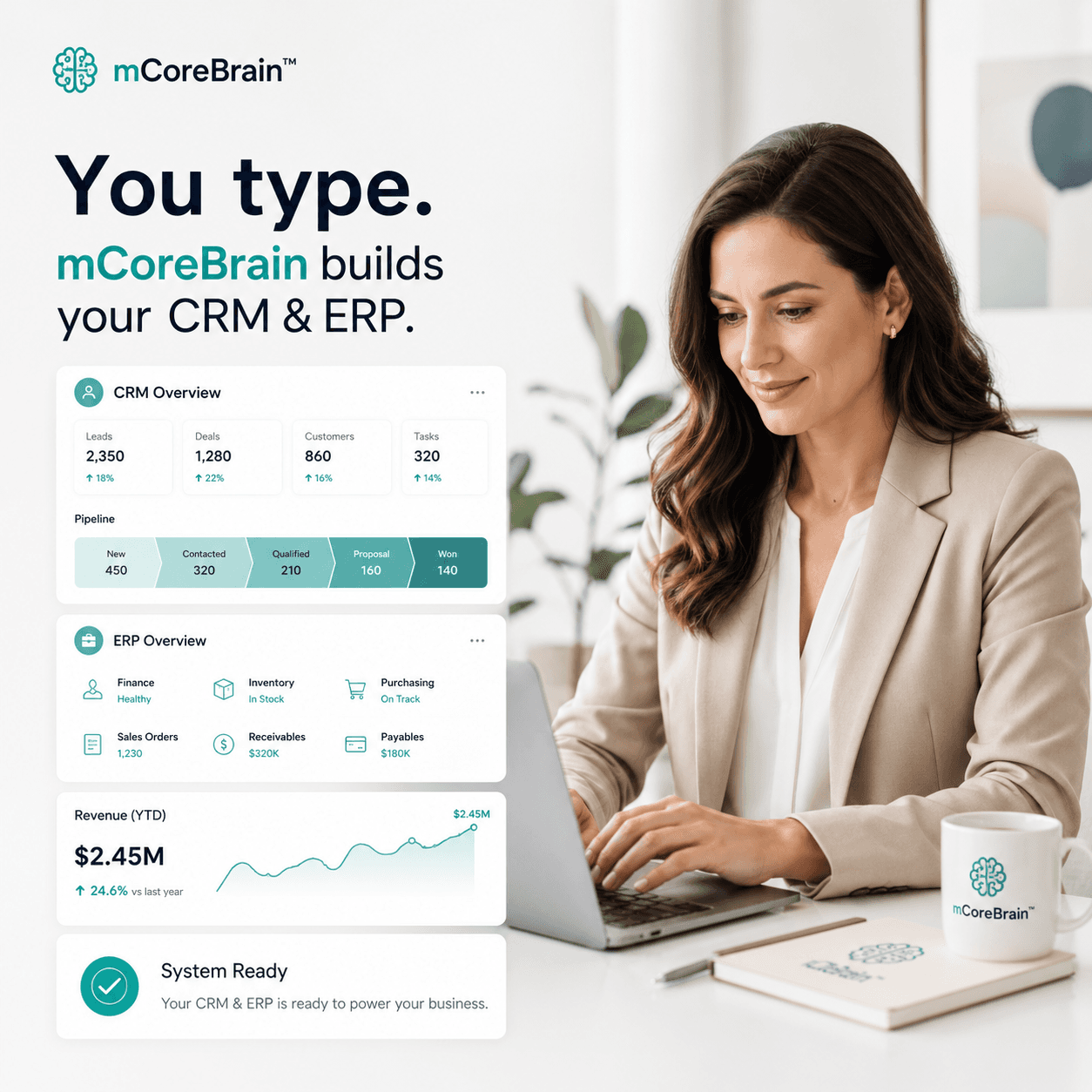
M&A advisors juggle confidential deals, multiple stakeholders, and complex timelines across spreadsheets and email. mCoreBrain eliminates the chaos with AI-generated deal tracking built in minutes.

The M&A Advisor's Tool Problem
Mergers and acquisitions advisory is a high-touch, high-stakes business. A single deal involves dozens of stakeholders — clients, legal counsel, accountants, bankers, insurance brokers — each expecting real-time visibility into progress. Yet most M&A firms manage this complexity using the same tools they inherited five years ago: Salesforce pipelines designed for sales teams, spreadsheets for deal tracking, email threads for document handoffs, and a separate data room for confidential information.
The result is fragmentation. A partner can't see if due diligence documents have been uploaded without asking the team lead. An accountant doesn't know which client questions are still pending. A junior analyst wastes hours consolidating timeline updates across three different Slack channels and two email inboxes.
Traditional CRM and ERP systems were never built for the deal advisory workflow. They impose rigid deal stages ("Prospecting," "Negotiation," "Closed") that don't map to M&A reality. They require months of implementation by consultants who don't understand your firm's unique deal structure. And when you need to track a new dimension — say, regulatory approval gates or antitrust risk flags — you're back to spreadsheets.
Why M&A Needs Prompt-Native Design
M&A advisory workflows are inherently bespoke. Your firm's deal stages, approval gates, reporting lines, and client communication cadence are unique. A boutique firm tracking five parallel deals has completely different needs from a large bank tracking 200 deals across geographies and sectors.
mCoreBrain solves this by letting you describe your deal workflow in plain language. Instead of hiring consultants to map your processes into a pre-built system, you tell mCoreBrain:
"We track M&A deals through five stages: Initial Meeting, NDA Signed, Preliminary Valuation, Due Diligence, and Term Sheet. Each deal has a Lead Advisor, Finance Lead, and Legal Lead. We need to log all client calls, track document deliverables, flag regulatory risks, and generate a monthly deal status board for partners."
mCoreBrain generates the entire system in minutes: deal records, role-based access control, document tracking fields, approval workflows, automated reminders, and partner dashboards — all customized to your language and process.
What a Generated M&A System Looks Like
When you deploy, you get:
- Deal Module: Each deal is a living record with client info, advisors, timeline, valuation range, and current stage. All stakeholders see the same source of truth.
- Deliverable Tracking: Sub-records for NDA, LOI, financial statements, legal opinions, etc. — each with owner, deadline, and completion status.
- Risk Log: Regulatory flags, antitrust concerns, financing contingencies — searchable and reportable.
- Call & Meeting Log: Every client interaction, internal sync, and advisor note attached to the deal, with automatic timestamp and participant list.
- Approval Gates: Multi-level sign-offs (Partner Review → CFO Approval → Client Sign-Off) that don't require manual email chasing.
- Partner Dashboard: Real-time view of all deals, deal value in flight, stage distribution, and red-flagged items.
- Role-Based Access: Partners see all deals; junior analysts see only their assigned deals; compliance sees all risk flags but not pricing data.
From Chaos to Governance in One Click
The power is in two-layer governance: mCoreBrain's admin layer lets you change workflows, add fields, or adjust roles without touching code. Your business users work in a clean, focused interface — no CRM bloat, no unnecessary fields.
When a deal changes (e.g., a new regulatory gate emerges), you update the workflow once in the admin layer. All teams instantly see the change. No re-training, no broken integrations.
When you need to bring in a new advisor or adjust confidentiality rules, you adjust role-based access and permissions in seconds. The system enforces governance at the database level, not through manual checklists.
Real Workflow Example
- Partner describes a new deal over coffee → Call is logged with timestamp and participants.
- Team automatically gets alerts based on their role → Finance Lead knows to prepare valuation; Legal Lead gets NDA template.
- Client email with questions lands in your inbox → You forward it to mCoreBrain, and it's auto-attached to the deal's conversation log.
- Due diligence stumbles → You flag a regulatory concern in the Risk Log; it surfaces in the partner dashboard within seconds.
- Monthly board update needed → Partner clicks "Generate Month Summary" and gets a real-time deck of all deals, stage distribution, and red flags.
The Economics
Traditional deal tracking costs you time, accuracy, and optionality. Every missing document, every unlogged call, every email thread that doesn't reach the right person is friction. Firms using legacy systems often miss regulatory deadlines or lose context across deals.
mCoreBrain costs a fraction of implementing SAP or Salesforce, takes days instead of months, and fits the way you actually work — not the way a consultant thinks you should work.
Next Steps
If your firm is drowning in deal spreadsheets, email chaos, or a Salesforce system that forces you into sales funnels, it's time to try prompt-native design. Visit mcorebrain.org to describe your ideal deal tracking system and see mCoreBrain generate a custom M&A ERP in real time — no consultants, no code, no compromise.